

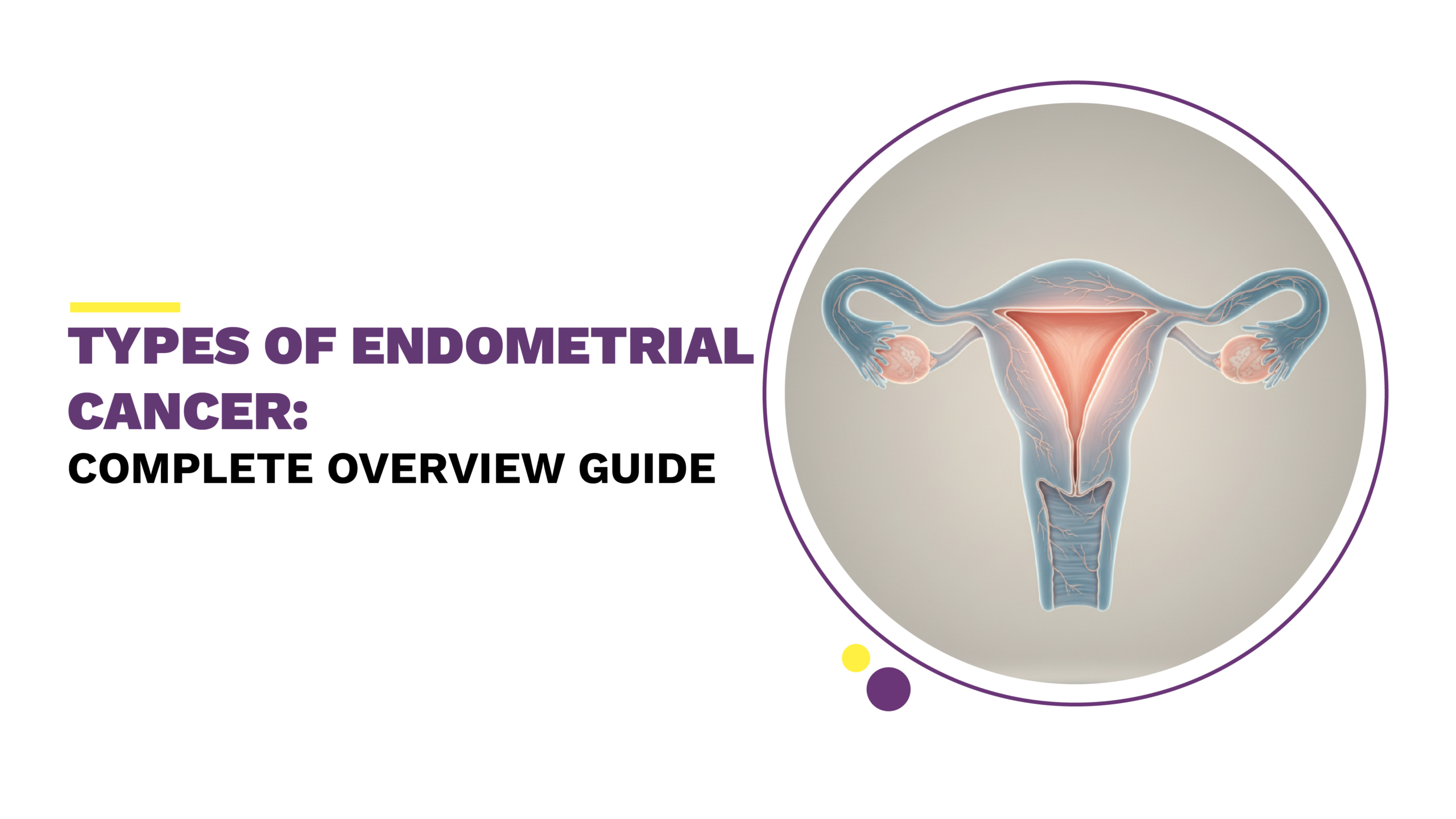
Endometrial cancer is the most common gynecologic malignancy affecting women worldwide, especially during and after menopause. While many women associate the condition with abnormal uterine bleeding, the reality is more nuanced.
Understanding the types of endometrial cancer, how they develop, and how they are diagnosed helps patients and clinicians make informed decisions about early detection, treatment, and follow-up care.
At Images Diagnostic Center, advanced MRI scanning, pelvic ultrasound, and specialized radiology interpretation play a central role in identifying endometrial abnormalities with accuracy. Because early detection often improves outcomes, precise imaging is critical for evaluating the uterus, endometrium, and surrounding pelvic structures.
This guide explains the major types of endometrial cancer, their clinical differences, diagnostic pathways, and the imaging methods that provide the most accurate assessment.
What Is Endometrial Cancer?
Endometrial cancer begins in the lining of the uterus (the endometrium). Most cases are detected early because they present with symptoms, particularly abnormal bleeding, but the aggressiveness and behavior of each cancer type differ significantly.
Clinically, endometrial cancers fall under two major categories:
- Type I (Endometrioid carcinoma).
- Type II (Non-endometrioid cancers).
Each has distinct risk factors, molecular features, and imaging appearances. Understanding these nuances is essential for accurate diagnosis and staging.
1. Type I Endometrial Cancer (Endometrioid Carcinoma)
Type I endometrial cancer is the most common form, accounting for nearly 80% of cases. It tends to grow slowly and is often detected at an early stage.
Key Features
- Estrogen-dependent.
- Often linked to obesity, hormonal imbalance, or polycystic ovary syndrome.
- Usually presents with early symptoms (e.g., post-menopausal bleeding).
- Better prognosis compared with Type II.
Common Symptoms
- Abnormal vaginal bleeding.
- Pelvic discomfort.
- Bleeding after intercourse.
- Spotting between menstrual cycles.
Even mild symptoms warrant investigation, especially after menopause.
Imaging Role in Diagnosis
At Images Diagnostic Center, evaluation typically involves:
- Pelvic Ultrasound: often the first-line test. Measures endometrial thickness and detects obvious structural abnormalities.
- Pelvic MRI scan in Kuwait: provides detailed evaluation MRI is the most accurate imaging tool for staging endometrial cancer. A 3T MRI offers superior contrast sensitivity, helping radiologists:
- Assess depth of myometrial invasion.
- Detect cervical involvement.
- Evaluate lymph nodes and pelvic tissue.
- Identify coexisting pathologies such as fibroids or adenomyosis.
- Doppler ultrasound: may help analyze vascular patterns associated with abnormal tissue.
2. Type II Endometrial Cancer (Non-Endometrioid Cancers)
Type II cancers are less common but more aggressive. They are not linked to estrogen exposure and often occur in women with a thinner endometrium.
Subtypes of Type II
- Serous carcinoma.
- Clear cell carcinoma.
- Carcinosarcoma (malignant mixed Müllerian tumor).
- Undifferentiated carcinoma.
These tumors tend to spread earlier and require more intensive imaging assessment.
- Serous Carcinoma
Serous carcinoma resembles ovarian serous carcinoma and carries a higher risk of metastasis.
Characteristics
- Rapid growth pattern.
- Often presents with advanced-stage disease.
- May involve the fallopian tubes or ovaries.
Imaging Considerations
Advanced pelvic MRI is essential to evaluate:
- Endometrial irregularities.
- Early myometrial invasion.
- Extra-uterine extension.
- Peritoneal implants.
CT scan may also be used to assess spread within the abdomen or chest.
- Clear Cell Carcinoma
This subtype is rare but aggressive. It has distinct histological features and tends to respond differently to treatment.
MRI Findings Commonly Include:
- Inhomogeneous tumors.
- Irregular margins.
- Potential early extension beyond the uterus.
Ultrasound often detects only nonspecific abnormalities, making MRI the modality of choice.
- Carcinosarcoma
Carcinosarcoma includes both carcinomatous and sarcomatous elements. It is considered highly malignant.
Imaging Goals
- Identifying tumor size.
- Detecting deep invasion.
- Evaluating parametrial or cervical involvement.
- Checking for nodal disease.
CT scan offers additional value for assessing lung, liver, or lymph node spread.
Risk Factors for Endometrial Cancer
Understanding risk factors supports prevention and early detection.
Major Risk Factors
- Age (most cases occur after menopause).
- Obesity.
- Unopposed estrogen therapy.
- PCOS.
- Diabetes.
- Family history or genetic conditions (e.g., Lynch syndrome).
- Early menstruation onset or late menopause.
- Tamoxifen use.
Women with multiple risk factors benefit from regular pelvic imaging, particularly ultrasound and screening MRI when clinically indicated.
Symptoms Women Should Never Ignore
While symptoms vary by cancer type, certain warning signs require prompt evaluation.
Most Common Symptoms
- Post-menopausal bleeding.
- Heavy bleeding after a long period without cycles.
- Pelvic pain.
- Unusual vaginal discharge.
- Pain during intercourse.
Even a single episode of unexplained bleeding warrants investigation through pelvic ultrasound and possibly MRI for further assessment and staging.
How Is Endometrial Cancer Diagnosed?
Diagnosis involves a combination of clinical evaluation, imaging, and tissue sampling.
Key Diagnostic Steps
1. Transvaginal Ultrasound
The standard first-line test. Measures endometrial thickness and identifies structural abnormalities. Ultrasound in Kuwait at Images Diagnostic Center is performed by experienced technologists using high-resolution machines that capture subtle endometrial variations.
2. Pelvic MRI Scan
MRI is the gold standard for staging. The 3 Tesla MRI scan in Kuwait offered by Images Diagnostic Center provides highly detailed images of:
- Myometrial invasion.
- Tumor margins.
- Cervical involvement.
- Pelvic lymph nodes.
MRI helps guide treatment decisions and surgical planning.
3. CT Scan.
CT is useful for evaluating:
- Lymph nodes.
- Chest metastasis.
- Abdominal or pelvic spread.
4. Biopsy
Confirms the diagnosis and determines the cancer subtype.
Why Imaging Matters for Endometrial Cancer Evaluation
Radiology plays a central role in assessing the presence, extent, and severity of disease.
How does MRI improve staging accuracy?
MRI provides unparalleled soft-tissue contrast, allowing radiologists to distinguish the tumor from normal myometrium with high accuracy. A 3T system further enhances resolution and reduces scan time, improving patient comfort.
MRI helps determine:
- Superficial vs. deep myometrial invasion.
- Cervical stromal involvement.
- Lymphadenopathy.
- Parametrial spread.
This information guides gynecologic oncologists in selecting the right therapy.
Can CT scanning detect cancer spread beyond the pelvis?
Yes. A CT scan provides rapid, detailed cross-sectional images of:
- Abdomen.
- Pelvis.
- Chest.
CT identifies distant metastases, lymph node enlargement, and peritoneal involvement. For many women, pairing MRI (local staging) with CT (systemic assessment) gives the most comprehensive evaluation.
Comparison of Imaging Methods for Endometrial Cancer
| Imaging Modality | Primary Use | Strengths | Limitations |
| Transvaginal Ultrasound | Initial evaluation | Quick, accessible, evaluates thickness | Limited in characterizing invasion |
| 3 Tesla MRI | Local staging | Best soft-tissue contrast, evaluates depth accurately | Requires patient stillness |
| CT Scan | Whole-body evaluation | Fast, excellent for metastasis detection | Less sensitive for local staging |
| PET-CT (if indicated) | Metabolic imaging | Detects active disease | Not always required |
Treatment Planning and the Role of Imaging
Accurate imaging influences every step of treatment.
MRI Helps Determine:
- If the cancer is confined to the uterus.
- Whether lymph node evaluation is required.
- The extent of surgery needed.
- Suitability for minimally invasive procedures.
CT and PET-CT Help Define:
- Whether cancer has spread.
- Need for systemic therapies.
- Monitoring treatment response.
In many cases, repeat imaging helps monitor the patient after treatment, especially if symptoms recur.
Imaging Follow-Up: When Is It Needed?
Follow-up imaging is recommended when:
- Symptoms reappear.
- Tumor markers rise.
- The patient undergoes radiation or chemotherapy.
- There is postoperative concern for recurrence.
MRI remains the preferred modality for pelvic evaluation, while CT evaluates thoracic and abdominal spread.
Images Diagnostic Center: Precision Radiology for Women’s Health
Women’s health imaging requires expertise, accuracy, and sensitivity. At Images Diagnostic Center, all gynecologic imaging, including pelvic ultrasound, MRI for endometrial cancer staging, and CT for systemic evaluation, is interpreted by highly experienced radiologists.
The center’s 3 Tesla MRI, modern CT systems, advanced ultrasound equipment, and patient-first radiology care ensure accurate and timely results to support early detection and treatment planning.
FAQs
1. Can endometrial cancer develop without any bleeding symptoms?
Yes. While abnormal bleeding is common, some aggressive types (like serous carcinoma) may present with minimal or no early bleeding.
2. Is MRI always required if ultrasound shows a thickened endometrium?
Not always, but MRI provides superior characterization when ultrasound findings are unclear or suspicious.
3. How long does a pelvic MRI for endometrial evaluation take?
Typically 20–30 minutes on a 3T system, depending on breath-holding sequences and patient comfort.
4. Can younger women develop endometrial cancer?
Yes, especially those with obesity, PCOS, or strong family history, though the majority of cases occur after menopause.
5. Does CT replace the need for MRI?
No. CT evaluates spread beyond the pelvis, while MRI is essential for accurate local staging.
6. Is screening recommended for women without symptoms?
Routine screening is not standard, but women with high-risk factors (e.g., Lynch syndrome) may benefit from periodic imaging.
Contact Us for Advanced Women’s Imaging
For accurate evaluation of endometrial conditions, from abnormal bleeding to advanced staging, our radiology team is ready to support your diagnostic journey with the highest international standards.
Images Diagnostic Center – Kuwait
Call: (+965) 1899 888
Email: info@imagesforhealth.com
Book your imaging with confidence. Our radiologists provide precise interpretation and patient-centered care at every step.