
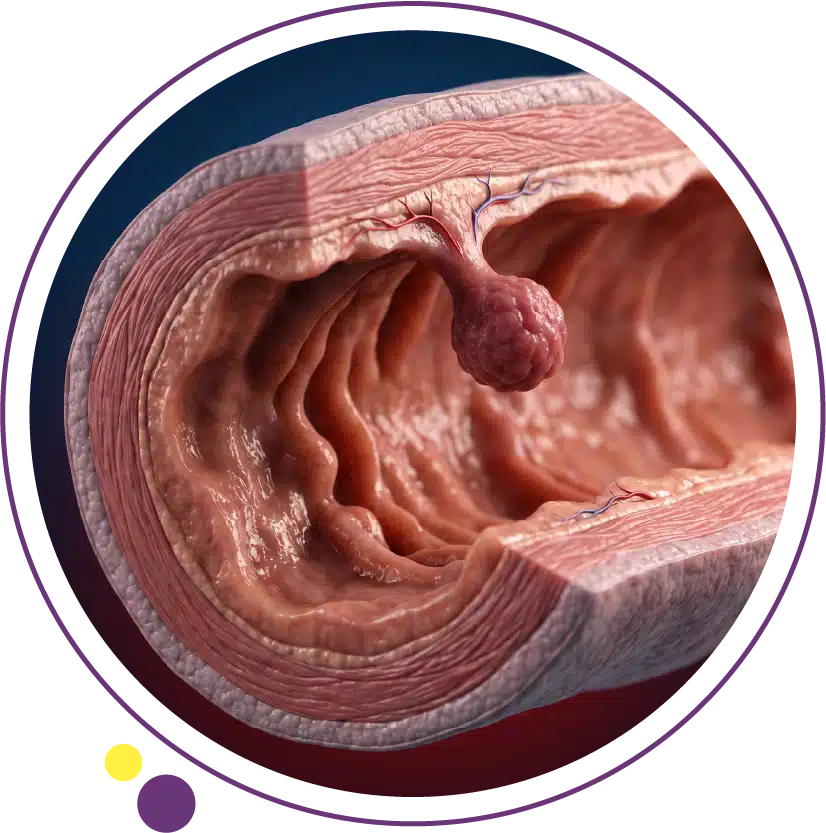
Colon cancer announces itself through signs that are often indistinguishable, at first glance, from conditions that are far more common and far less serious. A patient with bloating, irregular bowel movements, and tiredness could have irritable bowel syndrome, a dietary intolerance, or colon cancer. The signs themselves do not carry a label indicating their cause. What distinguishes a warning sign that demands investigation from an ordinary gastrointestinal complaint is pattern, persistence, and context.
In this article, we will examine ten signs of colon cancer in detail, including several that are frequently attributed to other conditions, discuss how to tell them apart from their benign mimics, explain how signs differ depending on where in the colon the tumor is located, address the growing concern about colon cancer signs in younger adults, and describe the role that imaging plays in evaluating these signs when clinical suspicion is present.
The Central Challenge: When Common Signs Mean Something Serious
The core difficulty with colon cancer recognition is that none of its early signs are specific to the disease. Every sign on this list also appears in conditions that are benign and common. Rectal bleeding is far more often caused by haemorrhoids than by cancer. Fatigue and iron deficiency have dozens of possible causes. Bowel habit changes occur in irritable bowel syndrome, dietary changes, and anxiety. This ubiquity is not a reason to ignore these signs; it is a reason to evaluate them systematically rather than assuming they reflect something harmless without clinical assessment.
The clinical factors that shift the probability toward colon cancer rather than a benign cause include age over forty-five, progressive worsening of symptoms over weeks and months, the combination of two or more signs occurring together, a relevant family history, and the absence of an obvious benign explanation. Our comprehensive overview on colon cancer covers the full clinical picture from causes and staging through to treatment for readers who want the broader context alongside this signs-focused article. The diagnostic imaging services at Images Diagnostic Center in Kuwait are available to support the systematic evaluation of these presentations when clinical referral is made.
10 Signs of Colon Cancer to Watch For
1. Visible Blood in or on the Stool
Bright red blood coating the surface of stool, mixed into the stool, or visible in the toilet bowl after a bowel movement is one of the most commonly reported first signs in patients subsequently diagnosed with colorectal cancer. When blood is bright red and appears coating the outside of stool, haemorrhoids and anal fissures are statistically more likely causes. When blood is mixed into the stool or appears between bowel movements, a more proximal source in the sigmoid or descending colon is suggested. Any new rectal bleeding in an adult over forty warrants evaluation beyond reassurance, even when haemorrhoids are also present, because the two conditions frequently coexist.
The critical clinical mistake is assuming that a diagnosis of haemorrhoids explains all rectal bleeding and then ceasing investigation. A colorectal tumor can bleed simultaneously with haemorrhoids, and haemorrhoids do not provide protection against cancer. The appropriate approach is to evaluate the entire colorectal system rather than attributing bleeding to the most accessible explanation. CT colonography or conventional colonoscopy provides the definitive evaluation, with CT of the abdomen and pelvis at Images supporting the initial imaging assessment.
2. Dark, Tarry, or Maroon Stools
Stool that appears black and tar-like (melena) indicates bleeding from the upper gastrointestinal tract or the proximal colon, where blood has time to be partially digested before reaching the rectum. Maroon or dark red stool suggests bleeding from the right colon or transverse colon. Neither presentation typically causes visible bright red bleeding that patients associate with haemorrhoids, making these presentations more diagnostically alarming than the bright red variety. Melena specifically can indicate upper GI sources including stomach or duodenal ulcers, but right-sided colon tumors are also a recognised cause.
Black tarry stools without a clear explanation such as iron supplementation or bismuth ingestion require same-day clinical assessment. CT of the abdomen and pelvis, followed by endoscopy, is the appropriate evaluation pathway. Waiting for symptoms to resolve spontaneously is not an acceptable approach when melena occurs without an explanation. The CT service at Images Diagnostic Center provides rapid evaluation for these presentations across its Kuwait branches.
3. A Persistent Change in Bowel Frequency
A change in how often a person has bowel movements that persists for more than three to four weeks without a clear dietary or medication-related explanation is a clinical sign that requires evaluation. This may manifest as new constipation in someone who previously had daily movements, new diarrhoea in someone who previously had formed regular stools, or an unexplained increase in frequency. Colon tumors cause these changes by mechanically narrowing the bowel lumen, altering the transit of gut contents, and producing inflammatory changes that affect bowel contractility.
The distinction from irritable bowel syndrome here is important: IBS-related bowel habit changes tend to fluctuate in relation to stress, diet, and the menstrual cycle, are often longstanding rather than newly developed, and do not show structural abnormality on imaging. A new change in bowel frequency in a patient with previously regular habits, particularly when progressive and not obviously related to a dietary or lifestyle change, should not be attributed to IBS without ruling out a structural cause. CT scanning of the abdomen and pelvis identifies bowel wall thickening and luminal narrowing that distinguishes a structural from a functional cause. Our article specifically on colon cancer symptoms provides additional clinical detail on how this sign presents in practice.
4. Change in Stool Consistency or Calibre
Stools that have persistently become thinner, flatter, or ribbon-shaped, when this represents a change from the person’s baseline over a period of weeks, can reflect partial narrowing of the bowel lumen by a growing tumor. The change needs to be persistent and represent a departure from normal rather than an occasional variation, which is common in everyone. This sign is more typically associated with left-sided colonic and rectal tumors, where stool is more formed and the bowel calibre is smaller, making luminal narrowing more apparent in the stool shape.
A persistent change in stool calibre lasting more than a month, particularly in an adult over forty-five, warrants clinical evaluation and imaging. CT of the abdomen and pelvis at Images can identify the thickening or narrowing of the bowel wall responsible for this sign and provide preliminary staging information before endoscopy is performed. MRI of the pelvis at Images adds detail for tumors in the sigmoid and rectum where soft tissue characterisation is particularly important.
5. Unexplained Iron Deficiency Anaemia
This is the sign that most frequently causes right-sided colon cancer to be diagnosed later than it should be, because the cancer itself is invisible to the patient. Right-sided colon tumors bleed slowly and intermittently into the bowel lumen, and the blood is diluted and altered by digestive processes before reaching the rectum, meaning the patient never sees blood and has no visible gastrointestinal symptom. The only manifestation is a progressive iron deficiency anaemia causing fatigue, pallor, breathlessness on exertion, and weakness that the patient may attribute to overwork, poor diet, or menstrual loss in women.
Iron deficiency anaemia in any adult over forty without a clear dietary explanation requires gastrointestinal investigation. Both the upper and lower gastrointestinal tract should be assessed because either can be the source of occult blood loss. A CT scan of the abdomen and pelvis can identify a right-sided colonic mass, and CT colonography can evaluate the entire colon non-invasively. This sign is one of the most important reasons why a full blood count in middle-aged and older patients should always be acted upon rather than treated with iron supplementation alone. The CT service at Images is available to support this evaluation in Kuwait.
6. Persistent Abdominal Bloating and Fullness
Bloating and a sense of abdominal fullness are among the most common complaints in gastrointestinal medicine and are most commonly functional in origin. What distinguishes bloating caused by colon cancer from functional bloating is its character and associations: cancer-related bloating tends to be progressive, persistent, not relieved by passing wind or having a bowel movement, and is often accompanied by other signs such as a change in bowel habits or weight loss. In contrast, functional bloating typically fluctuates with dietary intake, is relieved partially by defecation, and does not come with other systemic features.
Bloating that has been present for more than four weeks, is progressive, and is associated with any change in bowel habit, rectal bleeding, or unexplained weight loss should not be attributed to a functional cause without imaging. CT of the abdomen and pelvis can identify a partial bowel obstruction producing bloating and distension, as well as the underlying mass causing it. The imaging team at Images can arrange this evaluation promptly at any of the three Kuwait branches.
7. Abdominal Cramping and Colicky Pain
Colicky abdominal pain, which comes in waves and is related to bowel contractions, can result from a partial bowel obstruction caused by a growing colon tumor. The pain typically builds and then partially subsides, reflecting waves of peristalsis against a narrowed segment. As the obstruction becomes more complete, the pain becomes more severe, more constant, and is accompanied by progressive distension and cessation of bowel movements. Deep, constant abdominal pain rather than colicky pain suggests local invasion of adjacent structures rather than simply luminal obstruction.
Abdominal cramping that has recently developed or changed in character without an obvious cause, is associated with bloating and changes in bowel habit, and does not resolve spontaneously within a few weeks, requires imaging. CT of the abdomen and pelvis is the appropriate initial study and can identify obstruction, its cause, and its degree. Our article on CT scan uses provides helpful context on how CT evaluates abdominal pathology including suspected bowel obstruction. CT at Images provides this assessment efficiently in Kuwait.
8. Unexplained Weight Loss
Unintentional weight loss of five percent or more of body weight over six months, defined as loss occurring without deliberate dietary reduction or increased exercise, is a systemic alarm symptom for malignancy. In the context of colon cancer, it reflects the metabolic burden of the tumor, appetite suppression through inflammatory cytokines, and reduced oral intake in patients with pain or nausea. It is more prominent in advanced disease but can occasionally appear relatively early in rapidly growing or large tumors.
Unexplained weight loss should never be attributed to stress or aging without clinical investigation in an adult over forty-five. CT of the chest, abdomen, and pelvis provides a comprehensive evaluation for occult malignancy and is the appropriate first imaging study when weight loss is the primary presentation. Combined with blood tests including full blood count, inflammatory markers, and carcinoembryonic antigen (CEA), it forms the initial workup for suspected gastrointestinal malignancy. The CT service at Images is available for this evaluation across all three Kuwait branches.
9. Persistent Fatigue Without Clear Cause
Fatigue as a sign of colon cancer is almost always mediated through one of two mechanisms: either the anaemia described above, or the systemic inflammatory and metabolic effects of a growing malignancy. Cancer-related fatigue is characteristically disproportionate to the level of activity, does not improve with sleep or rest, and is often described as a deep exhaustion qualitatively different from ordinary tiredness. When it occurs in combination with any gastrointestinal sign, the clinical threshold for investigation should be low.
Fatigue in isolation is almost never the presenting symptom of early colon cancer, but in the context of a new bowel habit change or a blood test revealing iron deficiency, it becomes part of a clinical picture that requires investigation. The imaging pathway begins with CT of the abdomen and pelvis, supported by MRI when additional detail is needed. At Images, both modalities are available to support the clinical team’s evaluation of this presentation.
10. A Palpable Abdominal or Rectal Mass
A palpable mass in the abdomen felt either by the patient or detected during a clinical examination represents a later sign indicating a tumor that has grown to substantial size. Right-sided colon tumors in particular can sometimes be felt as a mass in the right lower quadrant when they are large. A mass felt during a rectal examination by a physician is a highly significant finding for rectal cancer. While a palpable mass indicates more advanced local disease than a symptomatic tumor without a palpable mass, it is still potentially resectable and remains treatable.
A palpable abdominal or rectal mass requires urgent imaging to characterise the lesion, assess its local extent and relationship to adjacent structures, and evaluate for distant metastases. CT of the abdomen and pelvis with contrast is the standard initial study. MRI of the pelvis is essential for rectal masses to determine resectability and the relationship of the tumor to the mesorectal fascia and sphincter complex. MRI staging of rectal cancer is the gold standard for pre-operative planning and directly influences the decision about pre-operative chemoradiotherapy. At Images Diagnostic Center in Kuwait, both CT and MRI are available to support this urgent evaluation.
Signs Commonly Confused With Other Conditions
Several of the signs above have well-known benign mimics that make clinical recognition more challenging. Rectal bleeding is overwhelmingly more often caused by haemorrhoids than by cancer, but the two coexist frequently and haemorrhoids are not protective. Bowel habit changes and bloating are the cardinal features of irritable bowel syndrome, which is far more prevalent than colon cancer, but IBS is a diagnosis of exclusion that should not be assigned without excluding structural disease in patients over forty-five. Abdominal cramping and pain overlap with diverticular disease and inflammatory bowel disease, both of which require imaging to distinguish from cancer. Iron deficiency anaemia mimics dietary iron deficiency but the investigation pathway is identical: find the source.
The clinical rule that applies in all of these situations is simple: the older the patient, the longer the duration of symptoms, and the more signs that are present simultaneously, the lower the threshold should be for imaging. A twenty-five-year-old with two weeks of loose stools after a dietary change does not need imaging. A fifty-five-year-old with three months of progressive bowel habit change and fatigue does. The CT service at Images provides the imaging assessment that resolves this clinical uncertainty in practice.
Signs in Younger Adults: A Growing Clinical Concern
Colon cancer in adults under fifty, historically considered rare, has been increasing in incidence over the past two decades in multiple countries. This trend has led major gastroenterological societies to reduce their recommended average-risk screening age from fifty to forty-five in recent updated guidelines. Young-onset colorectal cancer more frequently involves the rectum and distal colon, more often presents with rectal bleeding and bowel habit changes, and more commonly has adverse molecular features compared to older-onset disease.
The clinical implication for younger adults is that symptoms should not be dismissed on the basis of age alone. A thirty-five-year-old with rectal bleeding, a change in bowel habit, and fatigue lasting two months deserves the same investigative pathway as a sixty-year-old with the same presentation. Young-onset colorectal cancer is more likely to be diagnosed at an advanced stage precisely because of the assumption that younger patients cannot have the disease. The imaging services at Images are available to all age groups in Kuwait without restriction.
The Role of Imaging in Evaluating These Signs
When the signs described in this article are present and clinical assessment indicates the need for further investigation, imaging provides the objective evidence that guides subsequent management. CT of the abdomen and pelvis with contrast identifies bowel wall thickening, luminal masses, regional lymphadenopathy, and distant metastases in a single comprehensive study. CT colonography provides a detailed map of the entire colonic lumen without sedation. MRI of the pelvis provides staging detail for rectal and sigmoid tumors that CT cannot match for soft tissue characterisation. Ultrasound of the abdomen can evaluate the liver for metastatic lesions when CT is not immediately available or when further characterisation of liver lesions identified on CT is needed.
All of these imaging studies are part of the diagnostic and staging pathway for colorectal cancer and complement rather than replace endoscopy and biopsy. Understanding how each modality contributes to different questions in the evaluation is the domain of the multidisciplinary team, but patients benefit from knowing that multiple imaging tools exist and that each adds specific information. Our article on types of CT scan explains how different CT protocols serve different diagnostic purposes in this context. At Images Diagnostic Center in Kuwait, CT, MRI, and ultrasound are all available across three branches to support the complete evaluation of these signs when clinical referral is made.
Frequently Asked Questions
Are colon cancer signs always gastrointestinal?
Not always. Iron deficiency anaemia presenting as fatigue, pallor, and breathlessness can be the first sign of right-sided colon cancer without any bowel-related complaint. Unexplained weight loss is a systemic sign rather than a gastrointestinal one. In advanced disease with liver metastases, jaundice, right upper quadrant pain, and abdominal distension may appear. The signs of colon cancer are more diverse than simply changes in bowel habit, which is why unexplained systemic symptoms in middle-aged and older adults should always prompt investigation of the entire gastrointestinal tract.
Can colon cancer be present without any signs at all?
Yes. Early-stage colon cancer, particularly in the right colon, is frequently entirely asymptomatic. This is the fundamental reason that screening in asymptomatic people is recommended and why it saves lives. A patient who feels completely well can have a significant polyp or an early-stage tumor that is completely curable but produces no symptoms. This is also why a normal bowel habit and no visible bleeding does not mean the colon is free of cancer without appropriate screening.
What is the most important sign to take seriously?
In terms of diagnostic urgency, unexplained iron deficiency anaemia in an adult over forty is arguably the most clinically critical sign because it is the one most frequently attributed to a non-gastrointestinal cause and investigated incompletely. A right-sided colon cancer can bleed silently for months producing progressively worsening anaemia, and the patient and their physician may treat the anaemia without identifying the underlying source. Any unexplained iron deficiency in an adult over forty must include evaluation of the entire gastrointestinal tract. CT of the abdomen is a valuable first imaging step in this evaluation at Images.
How quickly should signs of colon cancer be investigated?
Signs suggesting large bowel obstruction, significant acute rectal bleeding, or a palpable abdominal mass require same-day or next-day evaluation. Signs that are serious but not immediately life-threatening, including unexplained iron deficiency anaemia, persistent bowel habit change lasting more than a month, or rectal bleeding in a patient over forty, should be investigated within two to four weeks. Signs that are milder or more ambiguous can be monitored clinically for a defined period before imaging is arranged, but the defined period should be short and imaging should follow if symptoms persist or progress.
Is a CT scan enough to diagnose colon cancer?
CT can identify colonic masses with high sensitivity and provides essential staging information, but histopathological confirmation through biopsy, obtained during colonoscopy or image-guided biopsy, is required for a definitive diagnosis. CT colonography is a validated non-invasive alternative to optical colonoscopy for polyp detection but also requires tissue sampling when a lesion is found. The two approaches complement each other: CT at Images identifies and stages the lesion, while endoscopy confirms it histologically and allows therapeutic intervention.
Acting on Signs Before They Become Late Symptoms
The ten signs described in this article span a spectrum from subtle systemic changes like fatigue and anaemia to more obvious findings like visible blood and a palpable mass. What they share is that each one, in the right clinical context, should trigger investigation rather than a period of watchful waiting with no imaging. The colon cancer that is found at Stage I when a patient has acted on early signs is a fundamentally different clinical situation from the colon cancer found at Stage IV because the same signs were attributed to something else. The imaging pathway exists, the tools are available, and the outcome difference is substantial.
Images Diagnostic Center provides CT scanning, MRI, and ultrasound across three Kuwait branches for patients whose signs require evaluation:
To arrange imaging for a bowel concern or any of the signs described in this article, contact Images directly.