
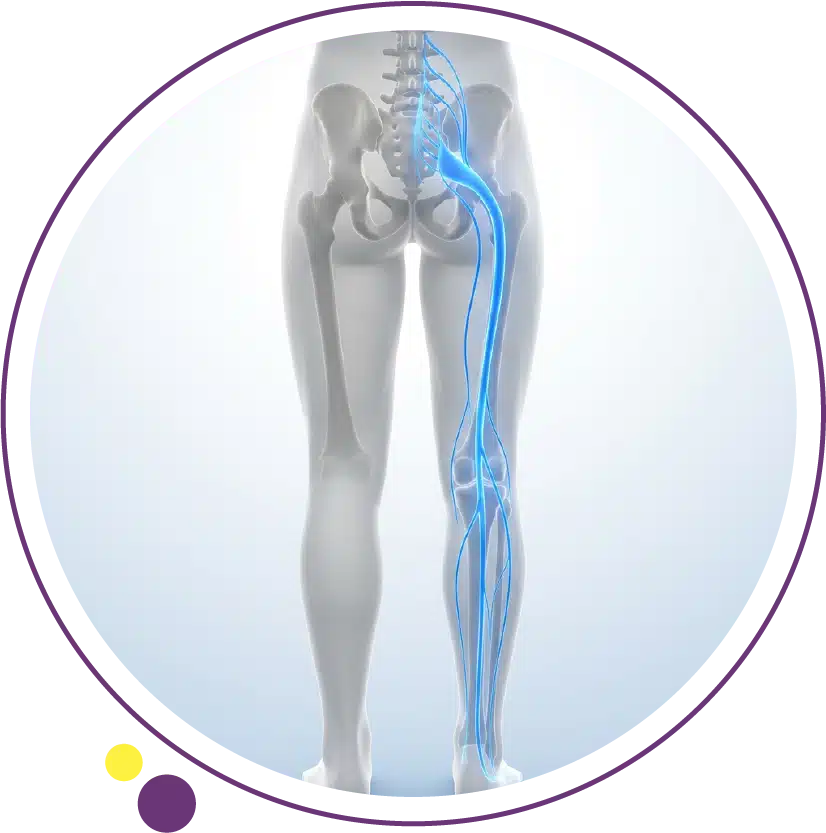
Sciatica symptoms usually happen when a nerve root in the lower back becomes irritated or compressed, causing pain and other nerve-related symptoms that travel into the buttock, leg, and sometimes the foot. Sciatica is not a diagnosis by itself. It is a symptom pattern, often linked to lumbar radiculopathy, which commonly happens when a disc problem or bony narrowing affects the nerve roots that contribute to the sciatic nerve.
Many people assume sciatica means any leg pain, but that is not always true. True sciatica usually follows a nerve pathway and often affects one side of the body. The pain may be sharp, burning, electric, or shooting, and it can come with numbness, tingling, or weakness. In many people, symptoms improve within weeks to a few months, but some cases need medical assessment, especially when symptoms are severe, progressive, or linked to red flags.
For patients looking for answers in a radiology center in Kuwait, it is also important to know that imaging is not automatically needed for every case of sciatica. In uncomplicated cases, early scans often do not change initial treatment. But when symptoms persist, worsen, or suggest serious nerve compression, imaging such as MRI or, in selected situations, CT scan may help clarify the cause and guide next steps.
What are sciatica symptoms?
Sciatica refers to pain that travels along the path of the sciatic nerve, usually from the low back into the buttock and down the back of the thigh and calf. The pain may extend below the knee and into the foot. It often happens on one side and may feel more prominent in the leg than in the lower back.
The symptoms happen because an irritated or compressed nerve root becomes inflamed and starts sending abnormal pain and sensation signals. That is why sciatica is often described as nerve pain rather than ordinary muscle pain. It may coexist with low back pain, but the leg symptoms are often what patients notice most.
What are 10 key sciatica symptoms to track?
Below are 10 common sciatica symptoms that often point toward nerve-related pain rather than simple muscular back pain. No single symptom confirms the diagnosis on its own, but the overall pattern can be very helpful.
1) Pain that radiates from the low back or buttock into the leg
This is the classic sign. The pain often starts in the lower back or buttock and travels down the back or side of the thigh. Many patients describe it as radiating pain that runs down the leg rather than staying in one spot.
2) Leg pain that is worse than the back pain
In many cases of sciatica, the leg symptoms are more prominent than the low back discomfort. This is one reason patients sometimes think the problem is in the leg itself, when the nerve irritation is actually starting in the lower spine.
3) Burning, electric, or shooting pain
Sciatic pain often feels different from a pulled muscle. Patients may describe it as burning, stabbing, sharp, or like an electric shock. That nerve pain quality is one of the strongest clues that the sciatic nerve pathway is involved.
4) Pain that travels below the knee
Pain that stays only in the buttock is not always true sciatica. When the pain clearly runs down into the calf or foot, nerve root irritation becomes more likely. This pattern helps doctors distinguish sciatica from more localized hip pain.
5) Numbness in the leg or foot
Sciatica can cause reduced feeling in part of the leg, ankle, or foot. Some people describe it as a patch of skin that feels dull, less sensitive, or asleep. Numbness can happen with pain or on its own.
6) Tingling or pins and needles
Tingling is another common nerve symptom. It may be intermittent or frequent and can affect the calf, foot, or toes. Patients often notice it when sitting, standing up, or walking for longer periods.
7) Weakness in the leg or foot
Sciatica can sometimes affect strength, not just sensation. A person may feel the leg is less reliable, notice difficulty lifting the front of the foot, or feel weaker when climbing stairs or standing on the toes or heels. This symptom matters because worsening weakness deserves prompt medical assessment.
8) Pain that worsens when sitting for a long time
Many people with sciatica notice that prolonged sitting makes symptoms worse. The same may happen when driving or working at a desk. This happens because certain positions can increase pressure on the irritated nerve root.
9) Pain that worsens with coughing, sneezing, or straining
A common feature of radicular pain is that it may flare when coughing, sneezing, or straining. This can briefly increase pressure around the irritated nerve root and make the nerve pain more noticeable.
10) Trouble walking normally because of pain or nerve symptoms
Some patients develop a limp, shorten their walking distance, or avoid certain movements because of the pain, numbness, or weakness. When symptoms start changing how you walk or perform daily activities, the problem deserves more careful evaluation.
Why might sciatica symptoms happen?
Sciatica most often happens when a herniated disc or bony overgrowth puts pressure on lumbar nerve roots upstream from the sciatic nerve. Other causes can include spinal narrowing and other structural changes around the nerve roots. The result is inflammation, pain, and sometimes numbness or weakness in the affected leg.
This is why sciatica is often grouped under lumbar radiculopathy. The lower back nerve root is the problem site, but the symptoms are felt farther down along the nerve pathway. That is also why the location of symptoms can vary from one patient to another depending on which nerve root is involved.
Which symptoms are red flags that need urgent care?
Most sciatica is painful but not dangerous. However, some symptoms can point to a more serious spinal problem that needs urgent treatment. Urgent emergency assessment is needed if sciatica affects both sides, if weakness or numbness in both legs is severe or worsening, if there is numbness around the genitals or around the anus, or if there is difficulty starting urination, loss of bladder control, or loss of bowel control.
These red flags can suggest severe nerve compression, including cauda equina syndrome, which is a medical emergency. Patients should not wait for a routine appointment if these symptoms appear.
When should you see a doctor for sciatica?
You should arrange a medical evaluation if your pain has not improved after trying home measures for a few weeks, if it is getting worse, or if it is stopping you from doing normal daily activities. That advice is especially important if symptoms are intense, recurrent, or clearly affecting strength, walking, or sleep.
It is also reasonable to seek earlier review if numbness, tingling, or weakness are becoming more noticeable, even without emergency red flags. Sciatica can improve with time, but symptoms that are persistent or progressive may need a more formal diagnosis and management plan.
How is sciatica diagnosed?
Diagnosis usually starts with history and physical examination. A clinician asks where the pain begins, where it travels, whether there is numbness or weakness, and whether coughing, sneezing, walking, sitting, or standing change the symptoms. The examination may include checking leg strength, sensation, reflexes, and nerve tension signs.
If symptoms are more severe, longer lasting, or difficult to explain, imaging or additional tests may be considered. MRI can show soft tissues such as herniated discs and pinched nerves, CT can also be used in selected cases, and EMG may help confirm the severity of nerve root injury.
When is imaging needed for sciatica?
Imaging is not routinely needed at the start of uncomplicated low back pain with or without sciatica. In non-specialist care, imaging is not usually requested unless serious underlying pathology is suspected, because imaging findings often do not change early management and may show changes that are common even in people without symptoms.
Imaging becomes more relevant when symptoms are persistent or worsening despite medical management, when the patient may be a surgical candidate, or when red flags suggest serious nerve compression, trauma, cancer, infection, or another serious underlying problem. In these situations, lumbar spine imaging, especially MRI, may be appropriate. CT may be used when MRI is not suitable, when bony detail is important, or in selected special studies such as CT myelography.
What should patients expect during MRI or CT for sciatica?
If your doctor refers you for an MRI in Kuwait, the scan is usually painless and does not use ionizing radiation. MRI is especially useful because it shows soft tissues clearly, including discs, nerve roots, and other structures that may compress the nerve. During the exam, you lie still on a table while detailed images of the lower spine are taken.
If CT scan in Kuwait is chosen, it may be because MRI is not suitable, the clinical question is different, or additional anatomic detail is needed. CT can also be used in special spine studies such as CT myelography. Patients should always tell the imaging team about pregnancy, prior procedures, implants, or any relevant medical history before imaging.
What self-care can help mild to moderate sciatica?
For many people, sciatica responds to self-care. The most consistent advice is to keep moving rather than staying inactive. A short period of rest may help early on, but prolonged bed rest or sitting for long periods usually makes symptoms worse. Gentle movement, regular activity, and gradual return to normal function are generally recommended.
Patients may also find relief from heat or cold packs and guided exercises or stretches, depending on the cause and stage of symptoms. Self-care should stay gentle and sensible. The goal is to keep the back and leg moving without forcing through severe pain or worsening neurologic symptoms.
Are there any limitations or special precautions?
One important limitation is that imaging findings do not always match symptoms perfectly. Common findings such as disc degeneration or joint changes may appear on scans even in people without pain. That is why a scan result must be interpreted in the full clinical context rather than treated as the whole diagnosis by itself.
Another important point is that sciatica-like symptoms can sometimes be caused by other conditions. Not every case of leg pain, numbness, or tingling comes from a lumbar disc problem. This is one reason clinicians look at the pattern of symptoms, exam findings, and sometimes imaging before deciding on the diagnosis.
Frequently asked questions
- Is sciatica always caused by a slipped disc?
No. A herniated disc is a common cause, but sciatica can also happen when bony overgrowth or narrowing in the lower spine irritates the nerve root. The exact cause depends on the underlying spinal problem.
- Does sciatica usually affect one leg or both?
Sciatica usually affects one side of the body. Pain traveling down both legs is less typical and can be a red flag, especially if it happens with numbness, weakness, or bladder and bowel changes.
- Do all people with sciatica need an MRI?
No. Routine early imaging is not usually needed in uncomplicated sciatica. MRI is more likely to be considered when symptoms are persistent, worsening, linked to red flags, or likely to change management.
- Can sciatica improve without surgery?
Yes. Many cases improve over weeks to a few months with time, activity modification, self-care, and conservative treatment. Surgery is generally considered only in selected cases, especially when symptoms are severe, prolonged, or associated with significant weakness or emergency red flags.
- What symptom is most concerning in sciatica?
The most concerning symptoms are saddle numbness, loss of bladder or bowel control, severe or worsening weakness, and symptoms affecting both legs. These need urgent medical assessment because they can point to a serious spinal emergency.
- Is walking good for sciatica?
In many cases, yes. Gentle activity and avoiding prolonged inactivity are usually advised because staying in bed or sitting for long periods often makes symptoms worse. The activity should still be paced and adjusted to symptom severity.
Your diagnostic journey at Images Diagnostic Center
Recognizing sciatica symptoms early can help patients know when simple self-care may be reasonable and when proper medical evaluation is needed. Timely imaging, when clinically indicated, can support accurate diagnosis by helping doctors look for nerve compression, disc problems, or other spinal causes behind persistent or progressive symptoms. High-quality radiology also helps clinicians make better decisions about follow-up, specialist referral, and next-step treatment while keeping patient comfort and safety in focus.
Core services available at Images Diagnostic Center in Kuwait include:
- MRI
- Open MRI
- CT scan
- Ultrasound and Doppler
- Digital X-ray
- Mammogram
- Bone density scan
- Home imaging services
Patients may contact us for more information or to arrange an appointment when imaging has been recommended. Images Diagnostic Center supports trusted radiology services and advanced diagnostic imaging in Kuwait, with an emphasis on diagnostic quality, patient-centered care, and clear imaging support for spine, nerve, and musculoskeletal evaluation.