
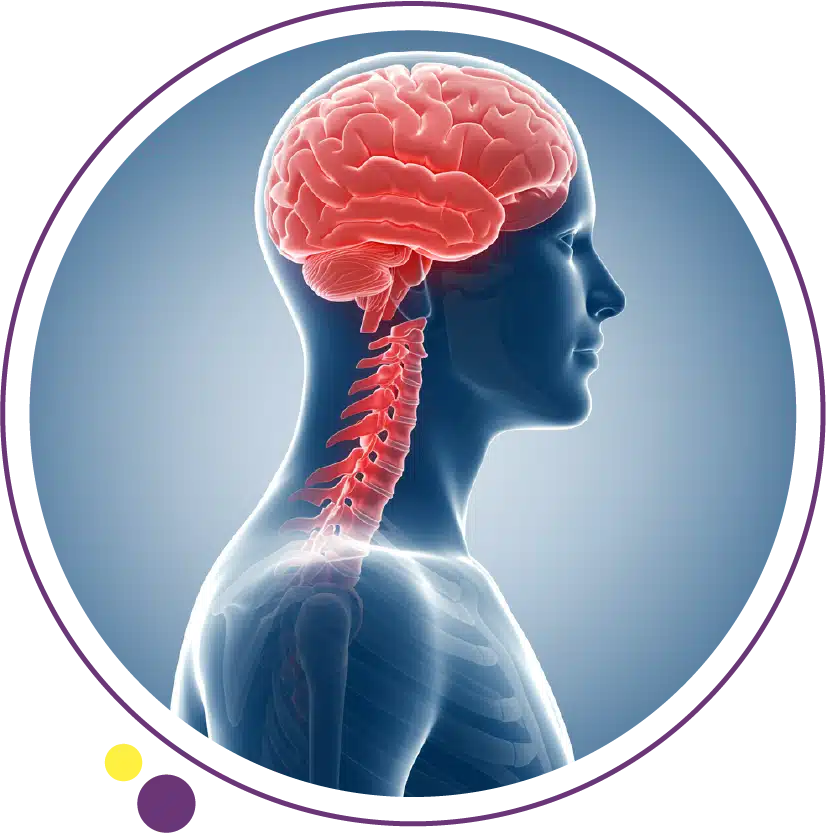
Multiple sclerosis is a long-term condition that affects the brain and spinal cord. It happens when the protective covering around nerve fibers, called myelin, is damaged, which slows or disrupts the messages traveling between the brain and the rest of the body. Because the central nervous system controls many functions, MS can cause a wide range of symptoms, from vision changes and numbness to balance problems, fatigue, and difficulty with memory or concentration.
For many patients, the hardest part at first is uncertainty. Symptoms may come and go, they may look different from one person to another, and there is no single test that confirms the diagnosis on its own. This is why doctors usually combine medical history, neurological examination, MRI findings, and sometimes spinal fluid testing when they investigate possible MS.
For a radiology center in Kuwait, MS is especially important because imaging plays a central role in both diagnosis and follow-up. A high-quality MRI in Kuwait can help show whether there are lesions in the brain or spinal cord that fit the pattern doctors look for in MS. At the same time, imaging does not replace a neurologist’s full assessment. It supports diagnosis, helps monitor disease activity, and guides long-term decisions.
What is multiple sclerosis?
Multiple sclerosis is an immune-mediated disease of the central nervous system. In simple terms, the body’s immune system mistakenly attacks myelin, the protective sheath that helps nerve signals travel efficiently. When myelin is damaged, communication along the nerves becomes slower or less reliable, and this is what leads to symptoms. MS mainly affects the brain, spinal cord, and optic nerves.
The condition does not affect everyone in the same way. Some people have mild symptoms and long periods of stability, while others develop more persistent disability over time. There are three main patterns: relapsing-remitting MS, secondary progressive MS, and primary progressive MS. Relapsing-remitting MS involves flare-ups followed by improvement, while progressive types tend to worsen more steadily.
There is currently no cure for MS, but there are treatments that can reduce relapses, slow disease activity in many patients, and help manage day-to-day symptoms. This is one reason early diagnosis matters. When MS is identified sooner, doctors can plan follow-up and treatment more appropriately.
What symptoms can multiple sclerosis cause?
MS symptoms depend on which part of the central nervous system is affected. Some symptoms are very noticeable, while others are subtle at first. A patient may experience one symptom early on, then develop a different pattern later.
Common symptoms include:
- fatigue that feels more intense than normal tiredness
- blurred vision, eye pain, or temporary loss of vision
- numbness, tingling, or “pins and needles” sensations
- muscle weakness in an arm or leg
- poor balance, dizziness, or clumsiness
- muscle cramps, spasms, or stiffness
- bladder symptoms such as urgency or frequency
- memory, concentration, or thinking difficulties
- walking problems and reduced coordination
- mood changes, including depression in some patients
Some people notice symptoms during a relapse, meaning a new neurologic problem appears or an old one clearly worsens over more than 24 hours. Relapse symptoms often come on over 24 to 48 hours, may last days to weeks, and then improve to varying degrees. Relapse symptoms often come on over 24 to 48 hours, may last days to weeks, and then improve to varying degrees.
It is also important to remember that these symptoms are not unique to MS. Weakness, numbness, fatigue, dizziness, and vision problems can happen in many other conditions. That is why doctors do not diagnose MS from symptoms alone.
When should you see a doctor for symptoms that could suggest MS?
Patients should seek medical evaluation when neurologic symptoms are new, persistent, unexplained, or keep returning. Examples include repeated episodes of numbness, one-sided weakness, balance trouble, visual disturbance, or changes in bladder control that do not have a clear short-term cause.
At the same time, not every symptom points to MS. MS should not be routinely suspected when the main complaints are fatigue, depression, dizziness, or vague sensory symptoms unless there is a history or evidence of more focal neurologic signs. Headache by itself is not usually suggestive of MS.
Urgent medical care is important if weakness, numbness, blurred vision, or coordination problems come on suddenly, because stroke and other emergencies must also be considered. Sudden weakness or numbness in one arm, sudden vision loss or blurring, or sudden balance and coordination problems should be evaluated urgently.
Why might a doctor request an MRI for suspected multiple sclerosis?
MRI is one of the most important tests in the evaluation of MS because it can show lesions in the brain and spinal cord that may not be obvious from symptoms alone. Diagnosis uses a combination of history, examination, MRI, and laboratory findings, and the MRI pattern helps doctors determine whether lesions are present in different locations and developed at different times.
A brain MRI in Kuwait may be ordered if a patient has symptoms such as optic neuritis, limb weakness, numbness, imbalance, or other neurologic episodes that suggest demyelination. In many cases, the neurologist may also request imaging of the cervical and thoracic spine, because MS commonly affects the spinal cord as well as the brain.
MRI is also used after diagnosis. Follow-up imaging can help establish a baseline before treatment, look for new lesions, and monitor disease activity over time, including disease that may be active even when the patient does not notice obvious new symptoms.
How is multiple sclerosis diagnosed?
There is no single blood test or scan that proves MS on its own. Doctors usually diagnose multiple sclerosis by combining several pieces of information: the patient’s symptom history, neurologic examination, MRI findings, and sometimes additional tests such as lumbar puncture and evoked potential studies. A careful differential diagnosis is essential because other neurologic or inflammatory conditions can mimic MS.
Doctors should confirm that the symptoms fit an inflammatory demyelinating process, exclude more common alternative diagnoses, and look for evidence that lesions have occurred in different places and at different times. If there is no clinical or radiologic proof that lesions developed at different times, cerebrospinal-fluid-specific oligoclonal bands may help support the diagnosis.
Lumbar puncture may also be useful when the diagnosis is not straightforward. Spinal fluid testing can show antibody-related changes linked to MS and can also help rule out infections and other conditions with similar symptoms.
One important principle for patients is that MRI alone is not enough. MS should not be diagnosed on MRI findings alone. Imaging is powerful, but it must be interpreted together with the patient’s history and exam by an experienced neurologist.
What should patients expect during an MRI for MS?
A MRI scan in Kuwait for suspected MS is usually painless and noninvasive. Brain MRI uses a strong magnetic field, radio waves, and a computer to create detailed images. Unlike CT, MRI does not use ionizing radiation. Some scans use gadolinium contrast through a vein to help show active lesions more clearly.
The patient usually lies on a table that slides into the scanner. The exam often takes around 30 to 60 minutes, and staying still is important so the images are clear. The machine is noisy, but ear protection is normally provided. Some patients find the enclosed space uncomfortable, especially if they have claustrophobia.
Before the scan, patients should tell the imaging team about pregnancy, kidney disease, allergies, recent surgery, or any metal or electronic devices in the body such as pacemakers, aneurysm clips, or cochlear implants. These details are essential for MRI safety. Open MRI systems may help some patients with claustrophobia, although not every MRI protocol is equally suited to every scanner type.
After the exam, a radiologist interprets the images and sends a report to the referring doctor. This matters because the MRI report is not the final diagnosis by itself. The neurologist still has to interpret the imaging findings in the full clinical context.
What treatments are available for multiple sclerosis?
There is no cure for MS, but treatment has improved significantly. In general, care focuses on three areas: treating relapses, using disease-modifying therapy when appropriate, and managing symptoms that affect daily life.
For relapses, doctors may use corticosteroids to reduce inflammation and help nerves recover more effectively. Plasma exchange may sometimes be considered when severe relapse symptoms do not respond to steroids.
Disease-modifying therapies are used to reduce relapse activity and slow progression in many patients, especially those with relapsing forms of MS. The exact medication depends on disease pattern, MRI activity, pregnancy planning, infection risks, other health issues, and the patient’s preferences. Treatment choice should always be individualized by the neurology team.
Symptom management is equally important. Options may include muscle relaxant medicines for spasms or stiffness, treatments for pain and vision-related symptoms, physiotherapy, cognitive rehabilitation, support for bladder and bowel symptoms, and help for sexual dysfunction, anxiety, depression, or fatigue. Many people need a multidisciplinary care plan rather than one single treatment.
How can patients manage daily life with MS?
A comprehensive care plan often includes medication, rehabilitation, physical activity, and practical lifestyle adjustments. Remaining physically active can improve mobility and fatigue and may also reduce complications related to inactivity. Physical therapy can help build strength and ease some MS symptoms.
Fatigue management is especially important because fatigue is one of the most common and most disruptive MS symptoms. Planning activity, taking breaks, avoiding overheating, and working with a physiotherapist or occupational therapist can help many patients function better. Some people find water-based exercise and cooling strategies useful when heat makes symptoms feel worse.
Mental and emotional health matter too. MS can affect mood, concentration, and independence, so support may include CBT, counseling, cognitive rehabilitation, workplace adjustments, or assistive devices at home. People with MS often benefit from coordinated support from neurologists, MS nurses, physiotherapists, occupational therapists, and other professionals.
Patients should also be cautious about unproven supplements or heavily marketed alternative treatments. While some practices such as yoga may help ease certain symptoms, there is no strong evidence that dietary supplements can treat MS itself.
Are there any risks, limitations, or special precautions in imaging for MS?
MRI is generally very safe when the correct screening process is followed, but it does have limitations and precautions. The powerful magnetic field means that some implanted devices or metal fragments may create safety issues or affect image quality. Patients with kidney disease may also need extra review before contrast-enhanced MRI.
Another practical limitation is that a patient needs to remain still. If someone is anxious, in pain, or unable to stay still, the image quality may be reduced. MRI also detects abnormalities that are not always specific to MS, especially as people age, which is another reason a neurologist must interpret the findings carefully.
Frequently asked questions
- Can a normal MRI rule out multiple sclerosis?
Not always, but a good-quality normal brain and spinal MRI makes MS less likely in many cases. Repeatedly normal imaging raises strong doubt about an MS diagnosis, though rare exceptions can occur.
- Is MRI enough to diagnose MS?
No. Doctors use MRI as a major tool, but they also need symptom history, neurologic examination, and sometimes lumbar puncture or other tests. MS should not be diagnosed on MRI findings alone.
- Does MS always get worse over time?
Not in the same way for everyone. Some people have relapses and then long periods of stability, while others develop gradual progression. The course depends on the type of MS and how active the disease is over time.
- Can people with MS still exercise?
Yes, in most cases physical activity is encouraged. Staying active can improve mobility and fatigue, and exercise plans can be adapted to a person’s symptoms and energy level.
- Is there a cure for multiple sclerosis?
At present, there is no cure for MS. However, medicines can slow disease activity in many patients and other treatments can help control relapses and improve daily function.
- When is spinal MRI needed in suspected MS?
Spinal MRI is often useful during the initial work-up, especially if symptoms could come from the spinal cord or if brain MRI is unclear. Cervical and thoracic spine MRI can improve diagnostic sensitivity and specificity in suspected MS.
Your diagnostic journey at Images for Health
When symptoms raise concern for multiple sclerosis, early assessment and timely imaging can make a meaningful difference. Accurate radiology supports better medical decision-making by helping neurologists look for lesions in the brain and spinal cord, compare new findings with prior scans, and monitor disease activity over time. In a specialized medical imaging center in Kuwait, patient comfort, safety screening, and image quality are all important because MS diagnosis and follow-up depend on clear, well-interpreted studies.
Core services available at Images Diagnostic Center in Kuwait include:
- MRI
- Open MRI
- CT scan
- Ultrasound and Doppler
- Digital X-ray
- Mammogram
- Bone density scan
- Home radiology
Patients who need more information or have been referred for a scan may contact us to arrange an appointment. Images Diagnostic Center supports trusted diagnostic imaging in Kuwait with a strong focus on diagnostic quality, patient safety, and reliable radiology pathways that help doctors and patients move forward with greater clarity.