

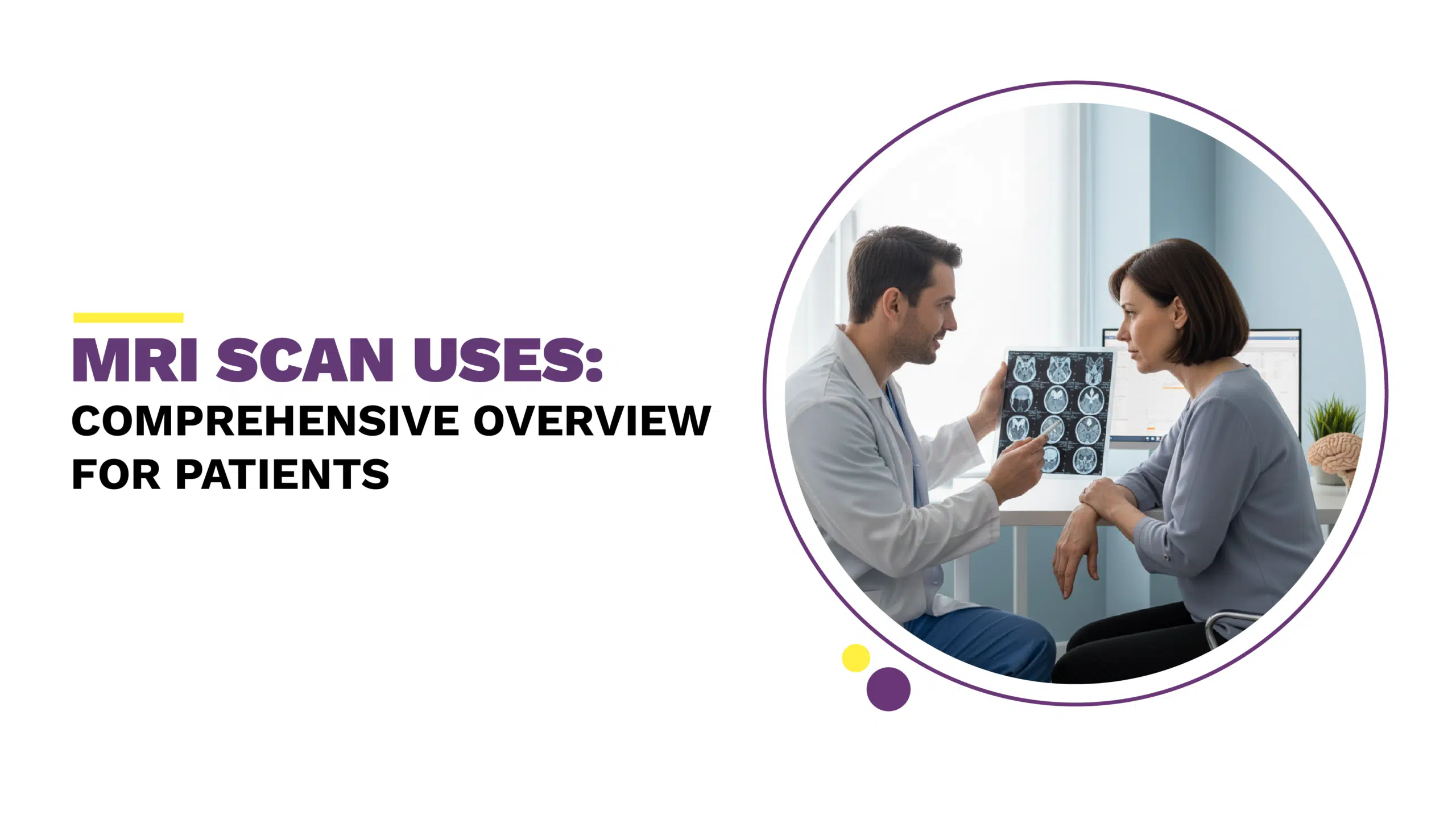
MRI has become one of the most relied-upon diagnostic tools in modern medicine due to its ability to visualize organs, soft tissues, nerves, and joints without radiation. At Images in Kuwait, MRI exams are performed using 3 Tesla MRI scanners, an advanced technology known for excellent contrast resolution, fast scan times, and improved diagnostic confidence.
From neurological disorders and sports injuries to liver disease and vascular abnormalities, understanding when MRI is recommended helps patients prepare for their visit and appreciate its role in accurate diagnosis.
Understanding the Value of MRI Imaging
MRI (Magnetic Resonance Imaging) captures high-detail cross-sectional images by aligning hydrogen atoms using powerful magnets and processing the signals they emit. Unlike CT scans or X-ray studies, an MRI scan does not expose patients to ionizing radiation, making it particularly suited for repeated evaluations or imaging of sensitive areas such as the brain, spine, pelvis, and joints.
At Images, MRI exams are performed by skilled radiographers and interpreted by subspecialty radiologists, including neuroradiologists, musculoskeletal experts, pediatric radiologists, and cardiac imaging specialists. This multidisciplinary expertise ensures that patients receive meaningful analysis rather than purely descriptive reporting.
What conditions can an MRI scan diagnose?
MRI is commonly recommended when physicians need high-accuracy soft tissue evaluation. It plays a critical role across multiple medical specialties:
1. Neurological MRI
Neurologists often request MRI scans for:
- Stroke assessment.
- Multiple sclerosis.
- Brain tumors.
- Epilepsy.
- Headache disorders.
- Cognitive decline.
Using 3 Tesla MRI in Kuwait, Images Diagnostic Center provides advanced neuroimaging sequences including diffusion, perfusion, tractography, functional MRI when required, and high-resolution cranial nerve views.
2. Spinal MRI
MRI of the spine helps evaluate:
- Disc herniation.
- Spinal stenosis.
- Nerve compression.
- Post-operative complications.
- Inflammatory disorders.
These findings guide orthopedic surgeons, pain management physicians, and neurosurgeons in planning interventions ranging from physiotherapy to minimally invasive procedures.
3. Musculoskeletal MRI
Sports medicine, rheumatology, and orthopedic care frequently rely on MRI for:
- Knee ligament tears.
- Shoulder rotator cuff injuries.
- Hip labral pathology.
- Stress fractures.
- Muscle tears.
Patients seeking advanced musculoskeletal MRI in Kuwait often benefit from the center’s subspecialty interpretation and its Pre-Gym MRI package targeting athletic spine and joint evaluation.
4. Pelvic and Abdominal MRI
MRI visualizes soft tissue organ systems with great clarity, including:
- Liver lesions.
- Pancreatic disease.
- Kidney tumors or cysts.
- Pelvic masses.
- Endometriosis.
- Prostate imaging.
Using dedicated multi-phase contrast protocols, radiologists evaluate organ functionality, tumor characterization, and treatment response.
5. Cardiac MRI
Cardiac MRI is used for:
- Heart muscle assessment.
- Congenital malformations.
- Myocarditis.
- Cardiomyopathy.
- Ischemia and viability studies.
At Images Diagnostic Center, cardiac MRI and cardiac CT calcium scoring help assess heart structure and vessel calcification, particularly valuable in Kuwait where cardiovascular risk factors are common.
What makes 3 Tesla MRI more accurate?
The 3 Tesla technology used at Images Diagnostic Center produces signal strength twice that of conventional 1.5T scanners. This translates clinically into:
- Sharper anatomical visualization.
- Faster acquisition.
- Better lesion detection.
- Enhanced neurological and musculoskeletal detail.
Radiologists can trace small abnormalities such as nerve root compression, early demyelination plaques, subtle marrow edema, or microvascular lesions that might be overlooked on lower-field equipment.
Comparing MRI with Other Imaging Modalities
Different modalities play different roles in clinical evaluation:
| Feature | MRI | CT Scan | Ultrasound |
| Radiation | No | Yes | No |
| Best for | Brain, spine, joints, soft tissue | Trauma, lungs, bone, vascular calcium | Abdomen, pelvis, pregnancy, Doppler |
| Speed | Longer | Fast | Fast |
| Contrast precision | High | Moderate | Limited |
MRI is often recommended when precision outweighs speed, particularly for neurological and musculoskeletal cases. Meanwhile, CT remains preferred in emergencies (e.g., suspected internal bleeding) due to speed and access.
How fast can MRI results be obtained?
Turnaround time depends on case complexity and reporting protocols. At Images Diagnostic Center, most MRI scan results in Kuwait are available within hours, helping physicians act promptly, especially in time-sensitive neurological and orthopedic situations.
When do doctors recommend MRI over other tests?
Specialists typically request MRI when:
- Symptoms persist despite normal X-ray or CT findings.
- Nerve involvement is suspected.
- Soft tissue contrast is necessary.
- Surgical planning requires mapping of anatomy.
- The patient cannot be exposed to radiation.
- Follow-up evaluation of chronic disease is required.
MRI can also detect early tissue changes not visible on CT or X-ray, such as bone marrow edema preceding fracture or synovitis before cartilage damage.
Preparation and patient experience during MRI scanning
Patient comfort plays a pivotal role in diagnostic success.
At Images Diagnostic Center, patients are briefed on:
- Clothing recommendations.
- Metal safety screening.
- Noise expectations.
- Breath-hold sequences if necessary.
Open MRI options are available for those with claustrophobia.
Does MRI require contrast?
Contrast (often gadolinium-based) may be recommended when:
- Inflammation or infection is suspected.
- Tumors need characterization.
- Blood vessel imaging is required.
- Post-operative changes must be distinguished from scar.
Images Diagnostic Center uses validated protocols and consultant radiologist oversight to determine contrast necessity, ensuring safety.
The role of MRI in long-term patient monitoring
MRI is invaluable for follow-up imaging:
- Multiple sclerosis lesions.
- Post-surgical joint healing.
- Tumor recurrence.
- Chronic inflammatory disease progression.
Its consistency and lack of radiation make it ideal for proactive health strategies, a philosophy reflected in the center’s whole-body MRI package.
MRI versus CT: how do clinicians decide?
MRI offers superior soft tissue differentiation, but CT remains key for:
- Acute abdominal pain.
- Trauma.
- Lung evaluation.
- Facial fractures.
- Cardiac calcium scoring.
Cardiac MRI complements CT calcium scoring by assessing muscle integrity and perfusion.
Accessibility to advanced MRI scanning in Kuwait
Patients benefit from:
- A 3 Tesla system.
- International accreditations (ACR Diagnostic Imaging of Excellence; Accreditation Canada).
- Subspecialty interpretation.
- Multiple branches (Jabriya, Hawally, Salmiya).
- Home radiology capability.
These elements enhance diagnostic accuracy and strengthen clinical decision-making pathways.
MRI scan uses across patient groups
MRI is helpful for:
- Adults with chronic neck, knee, hip, or spine pain.
- Children with developmental conditions requiring neurological imaging.
- Pregnant patients (after clinical approval) needing radiation-free evaluation.
- Athletes undergoing injury assessment.
- Elderly patients with degenerative joint changes.
At Images Diagnostic Center, each case benefits from tailored imaging protocols, radiologist expertise, and personalized patient care.
MRI and preventive medicine: early detection matters
Whole-body MRI and vascular screening packages help detect abnormalities early, ideally before symptoms manifest. This approach supports:
- Risk-based monitoring.
- Pre-exercise clearance.
- Cardiac risk stratification.
- Oncology screening.
- Preventive health planning.
Early identification of subtle abnormalities often leads to better outcomes, one of the key reasons physicians increasingly incorporate MRI into routine assessment strategies.
FAQs
1. Is MRI safe for people with metal implants?
Most implants are MRI-safe, but some older metallic devices may require alternative imaging. Screening is performed before scanning.
2. Can MRI detect early cancer?
MRI can visualize masses and tissue changes, and may support early detection when interpreted with clinical context.
3. How long does a typical MRI scan take?
Depending on body part and sequences required, MRI may take 20–60 minutes.
4. Do all MRI scans require sedation if I am anxious?
No. Sedation is considered only when anxiety is severe. Open MRI helps many patients tolerate the procedure.
5. Will contrast dye affect my kidneys?
Contrast safety is evaluated by reviewing kidney function and medical history. If needed, alternatives are considered.
6. How soon can I return to normal activities after MRI?
Most patients resume routine activities immediately unless sedation was used.
Contact Us for MRI and Advanced Radiology Services in Kuwait
If you need MRI scanning, CT scan appointments, ultrasound diagnostics, bone density testing, mammography, or home radiology services, you can schedule your evaluation with Images Diagnostic Center.
Locations:
- Jabriya – Clover Center, 2nd Floor
- Hawally – Mazaya, Al Mutasim St., 2nd Floor
- Salmiya – Mazaya Medical Harbor
Call: (+965) 1899 888
Email: info@imagesforhealth.com
Our radiology team is here to support accurate diagnosis, expert image interpretation, and peace of mind through high-quality diagnostic care.