

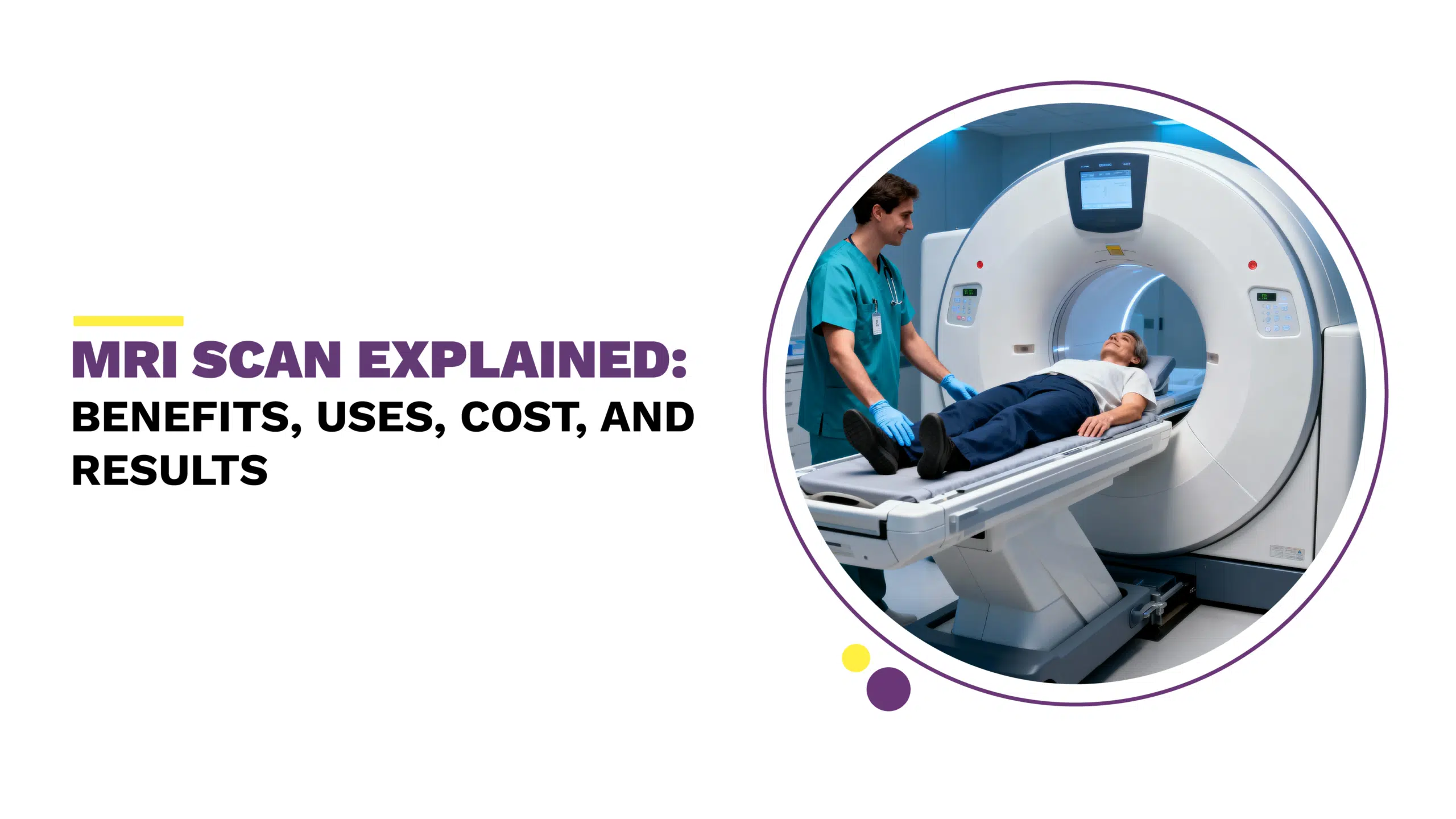
Magnetic Resonance Imaging (MRI scan) has transformed modern diagnostics, providing exceptional anatomical detail without ionizing radiation exposure. For patients and referring physicians, MRI plays a central role in detecting disease, guiding treatment, and evaluating outcomes.
At Images Diagnostic Center in Kuwait, MRI systems, including 3 Tesla MRI, 1.5T MRI and Open MRI, are operated by subspecialized radiologists and trained technologists to ensure accurate, comfortable, and clinically meaningful examinations.
This article offers a complete understanding of what MRI scans detect, when they are recommended, how they feel, expected cost ranges, and how MRI results are interpreted, all explained through an expert radiology perspective.
What is an MRI Scan Used For?
An MRI scan generates images using magnetic fields and radiofrequency pulses to evaluate soft tissues, organs, and musculoskeletal structures. It is widely requested because MRI offers superior soft-tissue contrast, enabling highly accurate visualization of:
- Brain and spine.
- Joints and ligaments.
- Abdomen and pelvis.
- Nerves and muscles.
- Tumors and inflammatory conditions.
For example, 3 Tesla MRI, available at Images Radiology Center, delivers high-resolution visualization of neurological disorders, helping detect:
- Stroke changes.
- Multiple sclerosis plaques.
- Pituitary lesions.
- Spinal cord compression.
MRI is also useful for chronic headaches, epilepsy workups, sports injuries, abdominal pain, and pre-surgical planning.
How Does MRI Work Clinically?
Unlike CT scans, MRI does not use X-rays. Instead, it aligns hydrogen atoms in the body using magnetic fields, and when these atoms return to normal alignment, they emit signals captured by the MRI coils.
The resulting images depend on:
- Tissue density.
- Water content.
- Fat composition.
- Vascular structures.
- Contrast response.
This is why MRI is an essential tool for detecting inflammation, subtle soft-tissue injuries, and neurological abnormalities.
Why is 3 Tesla MRI Considered More Accurate?
A standard 1.5 Tesla MRI is highly capable, but 3 Tesla MRI provides nearly double the magnetic strength, leading to:
- Finer anatomic detail.
- Reduced scan time.
- Higher image signal quality.
- More precise detection of small abnormalities.
Because of this, 3 Tesla MRI scan in Kuwait is commonly used for:
- Brain and spine imaging.
- Musculoskeletal injuries.
- Liver elastography.
- Pediatric.
These studies are available at Images Diagnostic Center, which holds the ACR Diagnostic Imaging Center of Excellence accreditation, reflecting global best practice in MRI quality.
Open MRI for Claustrophobic or Pediatric Patients
Some patients feel anxious in traditional MRI machines. At our centers, Open MRI provides:
- Wider, less confining design.
- Improved airflow and comfort.
- Reduced anxiety during imaging.
Open MRI is ideal for patients with anxiety or claustrophobic.
Although Open MRI can produce slightly lower resolution than 3T MRI, expert protocols help maintain diagnostic accuracy.
MRI Scan Process Step-by-Step: What Patients Should Expect
1. Appointment and Clinical Review
Your physician referral or medical history helps determine:
- Scan type.
- Protocols required.
- Use of contrast material.
2. Preparation and Safety Screening
The technologist will review whether you have:
- Pacemaker or implanted devices.
- Surgical clips.
- Tattoos or metal fragments.
- Pregnancy considerations.
3. Patient Positioning
You lie on a motorized table that slides into the scanner. MRI coils, specialized detectors, are positioned depending on the body part examined.
4. During the Scan
- Loud tapping noises occur, ear protection is provided.
- You must remain still for clarity.
- Technologists communicate via speaker for reassurance.
5. After Imaging
You can resume normal activity immediately unless sedated.
Do MRI Scans Require Contrast?
In certain cases, radiologists recommend gadolinium-based contrast to evaluate:
- Tumors.
- Blood vessels.
- Infection.
- Multiple sclerosis activity.
- Post-operative spine changes.
At Images Diagnostic Center, ACR guidelines for contrast safety are followed, with kidney function screening when needed.
MRI Scan Results: How are They Interpreted?
A board-certified radiologist reviews:
- Image quality.
- Anatomical structures.
- Pathology presence.
- Comparative findings.
The final radiology report includes:
- Description of the abnormality.
- Clinical impression.
- Recommendations.
Images Diagnostic Center delivers many MRI reports within hours, enabling faster clinical decision-making.
MRI vs CT Scan: Which Scan Do Doctors Choose and Why?
CT uses X-rays to generate images quickly, ideal for:
- Trauma.
- Lung evaluation.
- Surgical planning.
- Visualizing bone and dense tissues.
MRI is preferred for:
- Brain and spinal cord.
- Joints, tendons, cartilage.
- Tumor staging.
- Neurological diagnostics.
At Images Diagnostic Center, referring physicians choose the modality that best answers the clinical question. Both scanners are available, ensuring patients benefit from optimized diagnosis.
How Fast Can MRI or CT Results Be Obtained in Kuwait?
Turnaround time depends on workload and clinical urgency. At Images Diagnostic Center, most reports are ready within the same day, helping referring physicians start management quickly.
Common Medical Uses of MRI Scanning
Neurological Imaging
MRI helps detect:
- Stroke.
- Aneurysm.
- Brain tumors.
- Degenerative spine disease.
Musculoskeletal Imaging
It evaluates:
- ACL tears.
- Meniscus injuries.
- Rotator cuff tears.
Abdominal and Pelvic Imaging
High resolution views assist diagnosis of:
- Liver fibrosis (via Liver Elastography MRI).
- Kidney cysts.
- Gynecologic disorders.
Vascular Assessment
Non-contrast angiography allows evaluation of:
- Brain circulation.
- Peripheral arteries.
This is especially useful for patients unable to receive contrast.
MRI Cost in Kuwait: What Affects Pricing?
Pricing varies by:
- Scan type (brain vs spine vs abdomen).
- Contrast use.
- Technology level (e.g., 3 Tesla MRI).
At Images Diagnostic Center, MRI pricing aligns with high-quality global standards and subspecialty reporting to maximize clinical value.
Home Radiology in Kuwait, When Patients Cannot Travel
Through Images GO, the center’s home radiology service in Kuwait, portable digital imaging (ultrasound, X-ray, and certain scans) comes directly to the patient.
Ideal candidates include:
- Post-operative patients.
- Elderly or bedridden individuals.
- Families needing in-home convenience.
A trained technologist performs the scan, while radiologists interpret results remotely through secure systems. This ensures hospital-grade accuracy at home, reviewed by accredited specialists.
Ultrasound and Doppler: Real-Time Diagnostic Tools
Ultrasound uses sound waves to evaluate:
- Pregnancy.
- Liver disease.
- Gallstones.
- Thyroid nodules.
Doppler ultrasound assesses:
- Blood flow patterns.
- Varicose vein disease.
- Arterial blockages.
It is painless, radiation-free, and widely used by clinicians for immediate insight.
Breast Imaging and The Role of Mammography
Mammograms are central to breast cancer detection. In Kuwait, women over 40 are encouraged to schedule screenings yearly or per physician advice.
Benefits include:
- Early detection of suspicious lesions.
- Evaluating breast density.
- Guiding biopsy planning.
Radiologists may recommend breast ultrasound alongside mammography in dense breast cases.
Bone Density (DEXA Scan): Measuring Osteoporosis Risk
DEXA scanning evaluates:
- Vertebral spine mineral density.
- Hip fracture risk.
- Monitoring osteoporosis treatment response.
It is recommended for:
- Women over 50.
- Patients with long-term steroid therapy.
- Individuals with thyroid or autoimmune disorders.
Results help physicians tailor preventive therapies.
How Many MRI Scans Per Year are Safe?
MRI does not involve radiation, meaning there is no fixed annual limit. Safety depends on:
- Contrast tolerance.
- Clinical necessity.
- MRI-compatible implants.
Your radiologist assesses risk-benefit before recommending repeat studies. More about Radiation Risk.
Radiologist Expertise Matters: Why Accreditation Improves Results
Imaging quality doesn’t rely solely on machines, interpretation accuracy is heavily influenced by radiologist training. Images Diagnostic Center is:
- ACR Diagnostic Imaging Center of Excellence certified.
- Accreditation Canada Platinum Seal awarded.
These accreditations require:
- Peer-reviewed protocols.
- Tight safety controls.
- Performance monitoring.
- Subspecialty oversight.
Patients benefit from consistent reporting accuracy and reliable follow-up recommendations.
Patient Preparation Tips for MRI Scans
- Wear comfortable clothing without metal.
- Remove jewelry and watches.
- Mention previous surgeries.
- Discuss anxiety concerns, some centers offer sedation options.
Patients with pacemakers or implants should bring device cards for clearance.
MRI Scan Results, Value Beyond Diagnosis
MRI does more than detect abnormalities, it guides:
- Early treatment decisions.
- Surgery planning.
- Rehabilitation programs.
- Disease monitoring over time.
In neurological and musculoskeletal cases, repeat MRI helps determine recovery progression and treatment effectiveness.
FAQs
1. Does MRI detect inflammation or infection?
Yes, certain MRI sequences highlight inflammation and soft tissue fluid changes, aiding diagnosis of infection, tendon injury, or arthritis.
2. Are MRI results always definitive?
Not always. Some findings require correlation with CT, ultrasound, lab results, or clinical evaluation for full interpretation.
3. What is cardiac MRI used for?
Cardiac MRI evaluates heart function, myocardial scarring, congenital anomalies, and vascular structures with high clarity.
4. Can children undergo MRI safely?
Yes. MRI is safe for children, and pediatric protocols or sedation can be used to ensure comfort.
5. What if I feel anxious inside the MRI scanner?
Open MRI systems or supervised sedation options may be recommended after physician consultation.
6. Can MRI replace CT scans completely?
No. Each modality has advantages — CT is preferred for trauma and lung imaging, while MRI excels in neurological and soft-tissue diagnosis.
Book Your Scan at Images Diagnostic Center
Whether you require 3 Tesla MRI, Open MRI, CT Scan, Ultrasound, Mammography, DEXA bone density test, or home radiology services, our accredited imaging specialists are ready to support your diagnostic needs.
Locations:
Jabriya | Hawally | Salmiya, Kuwait
- Call: (+965) 1899 888
- Email: info@imagesforhealth.com
Patients and physicians can rely on Images Diagnostic Center for accurate reporting, advanced technology, and compassionate care across Kuwait.