
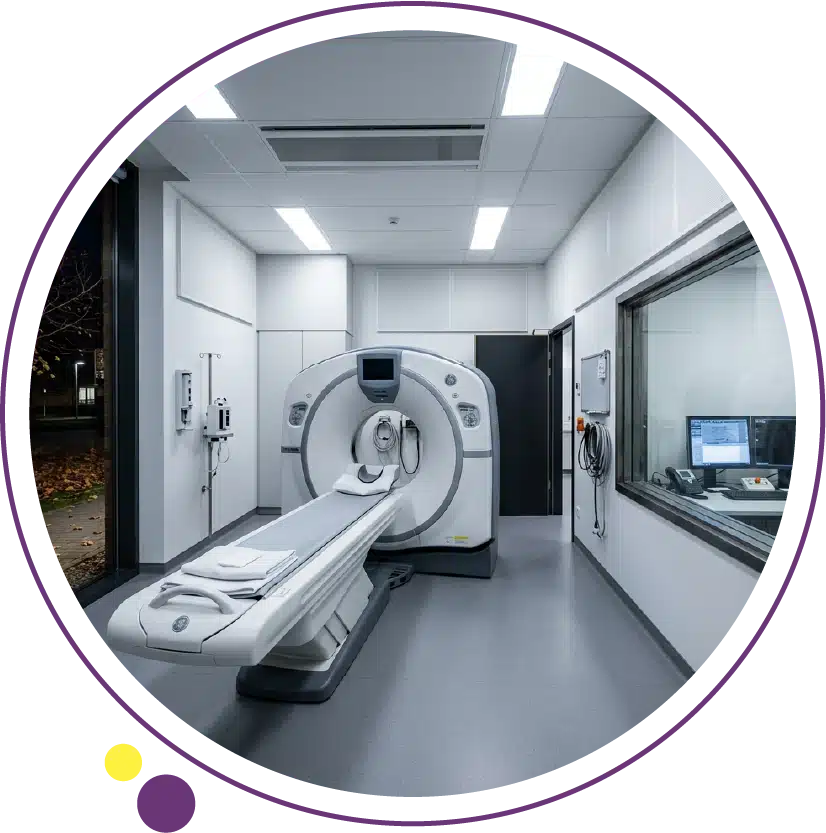
A CT scan is one of the most commonly used imaging tests in modern medicine because it gives fast, detailed cross-sectional images of the body. Compared with a standard X-rays, CT Scan shows much more detail in bones, blood vessels, soft tissues, and internal organs. That is why doctors often order it when they need quick answers about injury, pain, bleeding, infection, or possible cancer.
For patients, the main question is usually simple: what are the most important CT scan uses, and why would a doctor choose CT instead of another test? The answer depends on the symptom, the body area, how urgent the situation is, and whether the doctor needs to look at bone, lungs, blood vessels, or internal organs in detail. CT is especially valuable in emergency care because it is fast and can reveal injuries and internal bleeding quickly.
For a radiology center in Kuwait, CT Scan is an important part of diagnostic imaging because it helps evaluate urgent complaints and supports treatment planning for many conditions. A doctor may request a CT scan in Kuwait for trauma, chest symptoms, abdominal pain, vascular concerns, complex fractures, or cancer staging. The right imaging test still depends on the patient’s history, symptoms, and examination findings.
What is a CT scan?
A CT scan, also called computed tomography, uses X-rays and computer processing to create detailed images in thin slices. These slices can then be reviewed one by one or reconstructed into more complete views of the body. CT Scan is widely used because it can show more anatomic detail than a plain Digital X-ray and is often fast enough for urgent assessment.
CT does involve ionizing radiation, so it is not used casually or without a reason. Doctors recommend it when the expected medical benefit is greater than the radiation risk. In many situations, especially trauma or suspected internal bleeding, the speed and detail of CT Scan make it one of the most useful first-line tests.
What are the most common CT scan uses?
The most common CT scan uses include evaluating trauma, detecting internal bleeding, assessing chest and lung problems, investigating abdominal pain, finding kidney stones, studying blood vessels, staging cancer, and checking complex fractures or bone injury. CT Scan may also help guide certain procedures such as biopsy or abscess drainage.
Below are eight common diagnostic reasons explained in a simple patient-friendly way.
1) Trauma and internal bleeding
One of the most important CT scan uses is trauma assessment. In emergency cases, CT Scan can quickly show internal injuries, organ damage, and bleeding after a car accident, fall, sports injury, or other serious trauma. This speed matters because fast diagnosis can change treatment immediately.
Doctors may use CT Scan after trauma to check the head, chest, abdomen, pelvis, or spine depending on the injury. If a patient has significant pain, abnormal vital signs, or concern for internal bleeding, CT Scan is often preferred over slower or less detailed tests.
2) Head injury, stroke, or brain bleeding
CT Scan is commonly used in emergency evaluation of the head, especially when doctors need to look for skull injury, bleeding, stroke-related changes, or swelling. It is often one of the first scans used in acute neurologic situations because it is fast and widely used in urgent care.
This does not mean CT Scan is always better than MRI for all brain problems. MRI is often more detailed for some soft tissue and neurologic conditions, but CT Scan is especially helpful when speed matters, such as after head trauma or when bleeding must be ruled out quickly.
3) Chest and lung symptoms
A CT scan of the chest may be used when a doctor needs more detail than a chest X-rays can provide. Common reasons include unexplained chest pain, persistent cough, shortness of breath, fever, suspected lung disease, or an abnormal result on another imaging test. Chest CT Scan is also very good at showing small lung nodules and other chest abnormalities.
This is one reason CT Scan plays an important role in diagnosing lung conditions and evaluating possible cancer in the chest. In some cases, it is also used to assess the extent of infection, fluid collections, or other abnormalities inside the chest.
4) Abdominal pain and pelvic emergencies
Another major reason doctors order a CT scan in Kuwait or elsewhere is abdominal or pelvic pain when the cause is not clear. CT Scan of the abdomen and pelvis is commonly used for severe abdominal pain, nausea, vomiting, suspected appendicitis, diverticulitis, bowel problems, or other urgent internal conditions.
CT Scan is especially helpful when symptoms are broad or when doctors need to evaluate multiple organs at once. It can assess the liver, pancreas, intestines, kidneys, bladder, reproductive organs, and other structures in one exam, which is why it is often used when Ultrasound alone may not answer the full question.
5) Kidney stones and urinary tract problems
CT Scan is commonly used to look for kidney stones, especially in patients with sudden flank pain, blood in the urine, or severe discomfort suggestive of stone passage. Abdominal and pelvic CT Scan is one of the key imaging options when doctors need to confirm whether a stone is present and where it is located.
CT Scan may also be useful when doctors are investigating other causes of urinary symptoms or pain. Even when the final diagnosis is not a stone, CT Scan can help exclude other urgent abdominal or pelvic conditions that can mimic kidney stone pain.
6) Blood vessel studies and CT angiography
CT Scan is also used to study blood vessels. When contrast dye is used in a specialized Cardiac CT or angiography exam, doctors can evaluate blood flow problems, aneurysms, narrowed arteries, vascular injury, or other circulation-related abnormalities.
This is one of the most valuable CT scan uses when doctors need a fast view of the vascular system. Depending on the clinical question, CT angiography may be used for the chest, abdomen, brain, or limbs, especially when symptoms suggest a serious vascular problem that needs quick decisions.
7) Cancer detection, staging, and follow-up
CT Scan is widely used in cancer care. It can be part of cancer diagnosis, staging, and treatment planning. In practical terms, this means a CT scan may help show the size of a tumor, whether nearby lymph nodes look involved, and whether disease may have spread to other parts of the body.
CT Scan is not the only test used in cancer diagnosis, and it cannot replace biopsy, but it is often central to the overall work-up. It may also help doctors monitor how well treatment is working or guide procedures such as biopsy planning, drainage, or radiotherapy preparation.
8) Complex fractures, bones, and joints
Although X-rays are often the first imaging test for bone injury, CT Scan is sometimes preferred when doctors need a more detailed look at complex fractures, joint surfaces, facial bones, pelvic injury, or spine trauma. CT Scan can provide more precise anatomic detail than a plain X-rays, especially when a fracture pattern is complicated or treatment planning is needed.
This can be important before surgery, after major trauma, or when symptoms are strong but a plain Digital X-ray does not fully explain the injury. In those cases, CT Scan can help show the exact location and extent of bone damage more clearly.
When is CT preferred over MRI or ultrasound?
CT Scan is often preferred when speed is critical. In trauma, suspected bleeding, acute head injury, severe abdominal pain, or urgent chest problems, CT Scan is frequently used because it is fast and gives broad anatomic detail. That makes it especially valuable in emergency or time-sensitive settings.
MRI may be preferred when doctors need more detailed soft-tissue information in certain neurologic, musculoskeletal, or organ-specific questions. Ultrasound may be preferred for some gallbladder, pelvic, pregnancy-related, or bedside evaluations because it does not use radiation. The appropriate choice depends on the body part, the suspected condition, and the urgency of the problem.
For patients, the most helpful point is this: doctors do not order CT Scan because it is “better” in every situation. They order it when it is the most useful tool for the clinical question at that moment.
Why would a doctor recommend a CT scan?
A doctor may recommend a CT scan when symptoms suggest a condition that needs detailed internal imaging. This can include serious pain, breathing symptoms, head injury, suspected bleeding, cancer evaluation, vascular problems, or unclear findings from another test. CT Scan is also used to check how well treatment is working in some conditions.
The decision is based on clinical judgment, not on symptoms alone. The same complaint can lead to different imaging choices in different patients. For example, abdominal pain in one patient may lead to Ultrasound first, while in another patient with broader or more urgent symptoms it may lead directly to CT Scan.
What should patients expect during a CT scan?
A CT scan is usually quick and painless. During the test, the patient lies on a table that moves through a donut-shaped scanner while the machine takes images. Some CT Scans are done without contrast, while others use contrast dye to make blood vessels, organs, or abnormalities easier to see.
Preparation depends on the body part being scanned and whether contrast is being used. Some patients may be asked not to eat for a few hours beforehand. Patients should tell the imaging team about kidney disease, prior contrast reactions, pregnancy, and any other relevant medical concerns before the scan.
In many cases, the scan itself only takes a few minutes. The total visit may be longer if preparation or contrast injection is needed. Afterward, a radiologist reviews the images and sends a report to the referring doctor, who interprets the result in the full clinical context.
Are there any risks, limitations, or precautions?
The main CT-related risks include radiation exposure and possible reactions to contrast dye when contrast is used. CT Scan uses ionizing radiation, and radiation exposure may slightly increase lifetime risk over time. It can also reveal incidental findings that may lead to additional follow-up tests.
That said, the reason CT Scan remains so widely used is that the medical benefit is often much greater than the risk when the test is appropriately chosen. In emergencies, CT Scan can provide information that is time-sensitive and potentially lifesaving. The goal is not to avoid CT Scan at all costs, but to use it carefully when it is the right test.
Contrast dye also needs attention. Some patients can have mild or occasionally more serious reactions, and kidney-related concerns may affect whether contrast is appropriate. Pregnancy should always be discussed in advance because imaging decisions may change depending on the situation.
CT Scan also has limitations. It is excellent for many urgent and structural questions, but it does not answer every diagnostic problem. Some findings still need MRI, Ultrasound, laboratory testing, endoscopy, biopsy, or clinical follow-up for a complete diagnosis.
Frequently asked questions
- What is a CT scan mainly used for?
A CT scan is mainly used to diagnose disease or injury and to help plan treatment. Common uses include trauma assessment, internal bleeding, chest and abdominal evaluation, kidney stones, vascular studies, fractures, and cancer staging.
- Why would a doctor order CT instead of MRI?
Doctors often order CT Scan when they need quick answers, especially in emergencies. CT Scan is commonly preferred for trauma, bleeding, acute head injury, chest problems, and many abdominal emergencies because it is fast and gives detailed cross-sectional images.
- Can a CT scan detect cancer?
CT Scan can help detect suspicious masses, show tumor size, and assess whether cancer may have spread, so it is widely used in cancer diagnosis and staging. However, CT Scan alone does not confirm every cancer diagnosis, and biopsy or other tests may still be needed.
- Is CT better than ultrasound for abdominal pain?
Not always. Ultrasound may be preferred for some specific problems, but CT Scan is often used when doctors need to evaluate multiple abdominal or pelvic organs quickly or when the cause of pain is unclear. The best choice depends on the symptoms and the suspected diagnosis.
- Does a CT scan use radiation?
Yes. CT Scan uses ionizing radiation, which is one reason doctors order it only when medically justified. The benefit of the information gained often outweighs the risk, especially in urgent or serious conditions.
- What should you tell the imaging team before a CT scan?
Patients should mention pregnancy, kidney disease, previous contrast reactions, and any important medical issues that may affect contrast use or scan planning. Preparation can vary depending on the body area and whether contrast dye is needed.
Your diagnostic journey at Images for Health
Understanding common CT scan uses helps patients know why this test is often chosen when symptoms need fast and detailed evaluation. Timely imaging can support early diagnosis, guide emergency decisions, and improve treatment planning when clinically indicated. Accurate radiology also matters beyond diagnosis because it helps doctors assess injury severity, clarify internal disease, and monitor certain conditions over time. In a specialized medical imaging center in Kuwait, patient comfort, safety screening, and careful scan interpretation all support better medical decision-making.
Core services available at Images Diagnostic Center in Kuwait include:
Patients may contact us for more information or to arrange an appointment when imaging has been recommended. Images Diagnostic Center supports trusted radiology services and advanced diagnostic imaging in Kuwait, with a focus on diagnostic quality, patient-centered care, and reliable imaging support for urgent evaluation, treatment planning, and follow-up.