

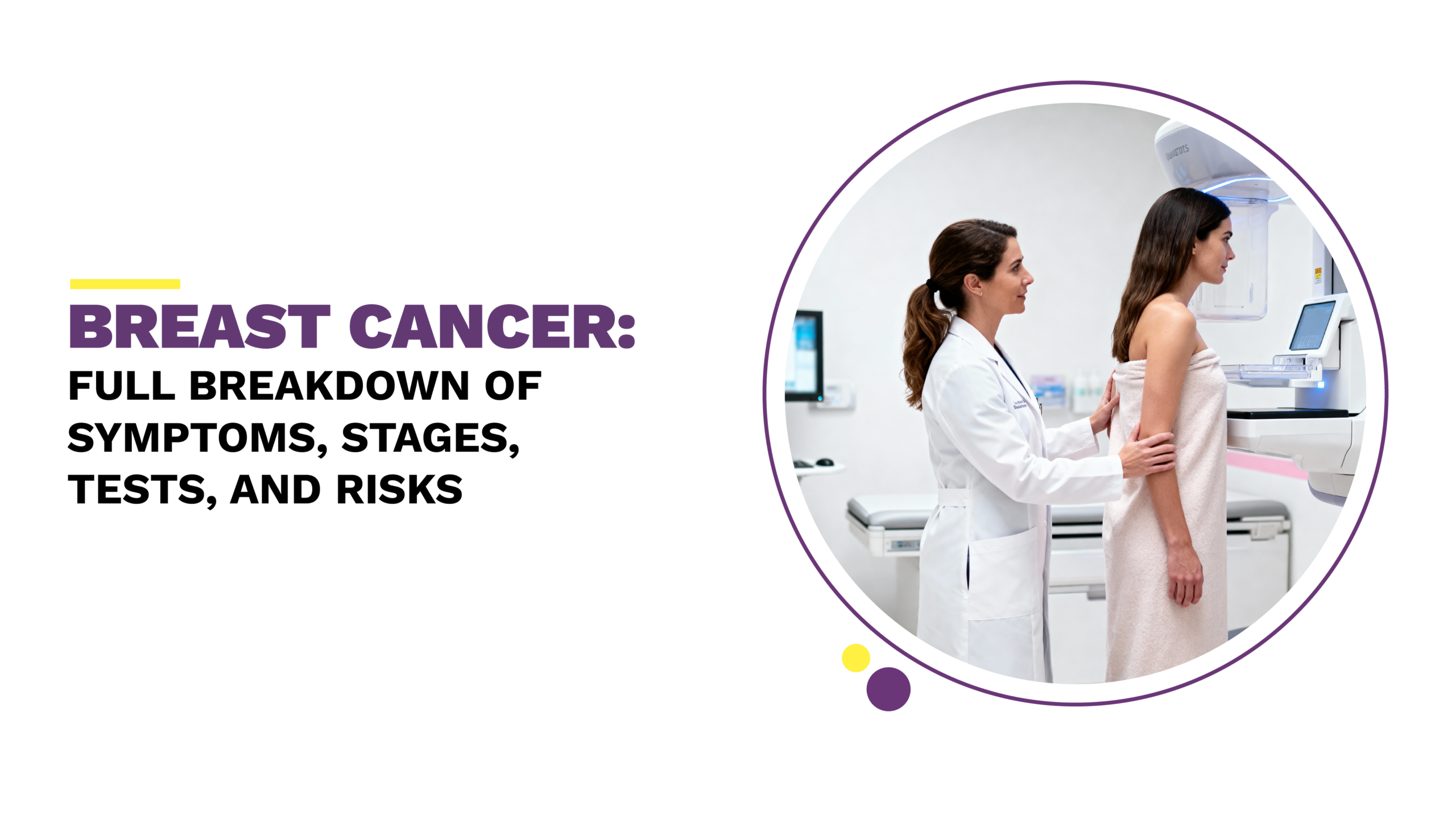
Breast cancer remains one of the most commonly diagnosed cancers worldwide, yet early detection continues to significantly improve survival rates and treatment outcomes. Understanding breast cancer symptoms, recognizing personal risk factors, and knowing which diagnostic tests provide the most accurate results empowers individuals to take proactive steps toward timely diagnosis and care.
This comprehensive guide explains the signs of breast cancer, common causes of breast cancer, how staging works, and which imaging tests are used to confirm a diagnosis. It is designed for patients, families, and caregivers who want clear, medically grounded information without fear-based language so they can make informed healthcare decisions with confidence.
What is breast cancer and how does it develop?
Breast cancer occurs when abnormal cells in breast tissue begin to grow uncontrollably. These cells can originate in the milk ducts, lobules, or surrounding connective tissue. Over time, cancer cells may invade nearby tissue or spread to lymph nodes and distant organs if not detected early.
The development of breast cancer is usually gradual. Cellular changes often begin long before symptoms appear, which is why imaging-based screening plays a crucial role in early detection.
Early signs of breast cancer you should not ignore
Many people associate breast cancer with a noticeable lump, but breast cancer symptoms can be subtle and vary from person to person. Some early signs are painless and easily overlooked.
Common signs of breast cancer include:
- A new lump or thickening in the breast or underarm
- Changes in breast size, shape, or contour
- Skin dimpling or puckering
- Redness, scaliness, or skin irritation
- Nipple inversion or change in position
- Nipple discharge not related to breastfeeding
- Persistent breast pain in one area
Not every breast change indicates cancer, but any persistent or unexplained change should be evaluated through appropriate imaging and clinical assessment.
Causes of breast cancer: what increases risk?
There is no single cause of breast cancer. Instead, it develops due to a combination of genetic, hormonal, lifestyle, and environmental factors. Understanding the causes of breast cancer helps identify individuals who may benefit from earlier or more frequent screening.
Key risk factors include:
- Increasing age
- Family history of breast or ovarian cancer
- Genetic mutations such as BRCA1 or BRCA2
- Hormonal factors including early menstruation or late menopause
- Prolonged hormone replacement therapy
- Obesity and sedentary lifestyle
- Alcohol consumption
- Previous radiation exposure to the chest
Having one or more risk factors does not mean a person will develop cancer, but it does influence screening recommendations and diagnostic strategies.
Breast cancer self exam: awareness, not diagnosis
A breast cancer self exam is a method of becoming familiar with the normal look and feel of your breasts. While self-exams do not replace professional screening, they can help individuals notice changes earlier. Self-exams are most effective when performed regularly and combined with scheduled imaging such as mammography or ultrasound.
How breast cancer is diagnosed
When breast cancer is suspected, diagnosis relies on a combination of imaging tests and tissue analysis. Each test provides different information, and radiologists select the appropriate modality based on age, symptoms, breast density, and risk profile.
Mammography
Mammography is the primary screening tool for breast cancer and is particularly effective at detecting early changes such as microcalcifications. It remains the foundation of population-based screening programs.
Ultrasound
Breast ultrasound is commonly used to evaluate palpable lumps or clarify findings seen on mammography. It helps differentiate solid masses from fluid-filled cysts and is especially useful in dense breast tissue.
Can I see breast cancer on an MRI?
Yes, breast cancer can be seen on an MRI, particularly in cases where mammography and ultrasound results are inconclusive. Breast MRI is highly sensitive and often used for high-risk patients, evaluating the extent of known cancer, or assessing response to treatment.
Biopsy
A breast cancer test is not complete without tissue confirmation. Image-guided biopsy allows a sample to be taken from the suspicious area and examined under a microscope to confirm whether cancer cells are present.
Imaging tests used in breast cancer diagnosis
| Test | Purpose | When It Is Used |
| Mammogram | Detects early breast changes | Routine screening, early detection |
| Breast Ultrasound | Characterizes lumps | Dense breasts, symptom evaluation |
| Breast MRI | High-sensitivity detection | High-risk patients, complex cases |
| Image-Guided Biopsy | Confirms diagnosis | When imaging shows suspicious findings |
Each imaging modality complements the others, and accurate diagnosis often depends on combining their results.
Understanding breast cancer stages
Breast cancer staging describes how far the disease has progressed at the time of diagnosis. Staging guides treatment decisions and helps predict outcomes.
- Stage 0
Non-invasive cancer confined to the ducts, often detected on screening mammography.
- Stage I
Small invasive cancer limited to the breast, with no or minimal lymph node involvement.
- Stage II
Larger tumor or spread to nearby lymph nodes but not distant organs.
- Stage III
Advanced local disease with extensive lymph node involvement or spread to nearby tissues.
- Stage IV
Cancer has spread to distant organs such as bones, liver, lungs, or brain.
Early-stage breast cancer generally has a significantly better prognosis than advanced-stage disease, highlighting the importance of early detection.
The role of imaging in treatment planning and follow-up
Imaging does not stop at diagnosis. Radiological studies are used throughout the treatment journey to:
- Determine tumor size and spread
- Guide surgical planning
- Monitor response to chemotherapy or radiation
- Detect recurrence during follow-up
Advanced imaging ensures that treatment decisions are based on objective, measurable data rather than symptoms alone.
Why early detection changes outcomes
Early detection often allows for less aggressive treatment, higher survival rates, and better quality of life. Cancers detected before spreading beyond the breast have significantly improved long-term outcomes compared to those diagnosed at later stages.
Routine screening, risk-based imaging, and prompt evaluation of symptoms form the foundation of effective breast cancer care.
Psychological and practical considerations
A potential breast cancer diagnosis can be emotionally challenging. Clear communication, timely imaging results, and professional interpretation help reduce anxiety and prevent unnecessary delays in care.
Choosing an imaging center with experienced radiologists and advanced diagnostic capabilities plays a critical role in this process.
FAQs
- What are the earliest signs of breast cancer?
Early signs may include a new lump, skin changes, nipple inversion, or unexplained discharge, even without pain.
- Can breast cancer occur without a lump?
Yes, some breast cancers present with skin changes or nipple symptoms rather than a distinct lump.
- How accurate are breast imaging tests?
When combined and interpreted by specialists, imaging tests provide high diagnostic accuracy, especially in early detection.
- Is breast MRI better than mammography?
MRI is more sensitive but not a replacement for mammography. Each test serves a specific clinical purpose.
- How often should breast screening be done?
Screening frequency depends on age, risk factors, and medical guidelines recommended by your physician.
- Does breast pain mean cancer?
Breast pain is common and often non-cancerous, but persistent or localized pain should be evaluated.
Taking proactive steps toward early diagnosis
Awareness of symptoms, understanding risk factors, and choosing appropriate diagnostic tests are essential components of breast health. Advanced imaging allows subtle changes to be detected long before symptoms become severe, improving outcomes through early intervention.
Images Diagnostic Center provides comprehensive breast imaging services including mammography, breast ultrasound, breast MRI, image-guided biopsy, CT imaging, MRI 3 Tesla, bone density testing, and home radiology services, all delivered within a highly accredited, patient-centered diagnostic environment.
For appointments or breast imaging consultations:
📞 (+965) 1899 888
Proactive diagnosis is not about fear, it is about clarity, confidence, and informed care decisions that support long-term health.