

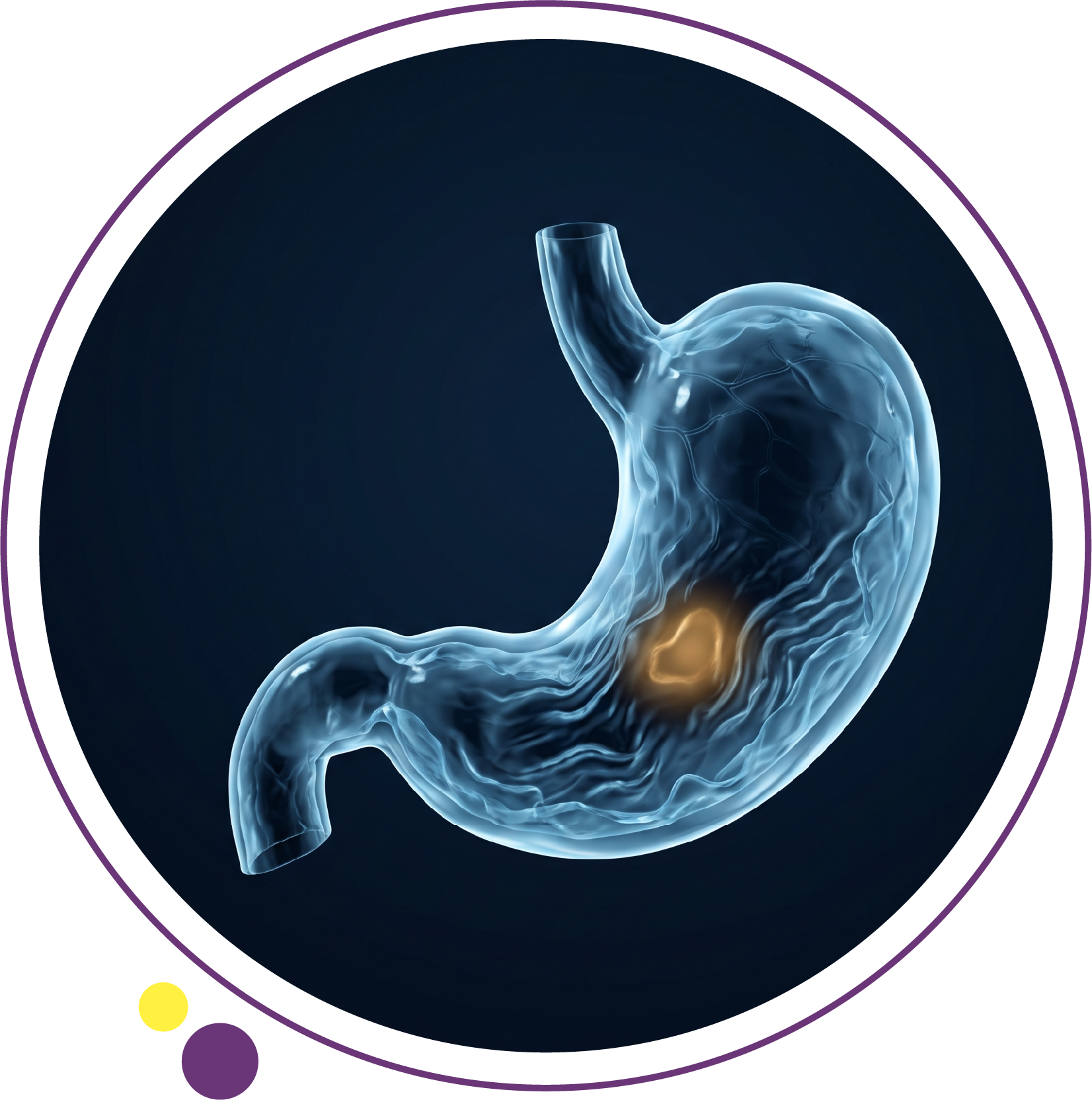
Stomach cancer symptoms can be hard to recognize because early changes may feel like ordinary indigestion, mild nausea, bloating, or a loss of appetite. Many people have no clear symptoms at an early stage. Persistent or unexplained symptoms deserve medical attention, but they do not automatically mean someone has cancer.
The most important distinction is between diagnosing a suspicious stomach lesion and imaging a confirmed cancer. An upper endoscopy with a biopsy is usually used to establish the diagnosis, while CT can help doctors assess whether a confirmed cancer has spread. For physician-requested imaging in Kuwait, IMAGES Diagnostic Center has two active branches:
What Is Stomach Cancer?
Stomach cancer, also called gastric cancer, begins when abnormal cells grow in the lining or other tissues of the stomach. The most common form is gastric adenocarcinoma. Different tumors behave differently, so a diagnosis must be confirmed and classified by a specialist rather than inferred from symptoms or a scan alone.
Early stomach cancer may cause few symptoms, and common digestive complaints are far more often explained by reflux, gastritis, ulcers, medications, or dietary causes. The goal of recognizing warning signs is to seek an appropriate examination, not to diagnose oneself.
Early Stomach Cancer Symptoms That Should Not Be Ignored
Persistent Indigestion or Upper Abdominal Discomfort
Repeated discomfort in the upper middle abdomen, particularly if it is new or changing, can be a reason to speak with a healthcare professional. Indigestion has many benign causes. Concern increases when symptoms persist, fail to improve with usual care, or occur alongside weight loss, vomiting, anemia, or other warning signs.
Feeling Full After Eating Small Amounts
Early satiety means feeling full unusually quickly despite eating much less than usual. It can happen for several reasons, including slow stomach emptying or medication effects. When it persists or comes with poor appetite and weight loss, further evaluation is warranted.
Persistent Bloating, Nausea, or Mild Stomach Pain
Some people develop bloating after meals, nausea, or discomfort that is difficult to describe precisely. These symptoms are nonspecific, and most do not indicate cancer. Keeping track of their duration and any associated changes can help the clinician determine whether testing is needed.
Loss of Appetite Without an Obvious Cause
A sustained reduction in appetite may be associated with many illnesses and periods of stress. In the context of persistent digestive symptoms or unexplained weight change, it should be assessed rather than assumed to be temporary.
The National Cancer Institute’s guide to stomach cancer symptoms notes that early disease is often asymptomatic, while indigestion, fullness, nausea, and appetite changes may occur when symptoms are present.
Advanced Stomach Cancer Symptoms and Warning Signs
Unexplained Weight Loss and Increasing Weakness
Losing weight without intending to do so may reflect poor intake, chronic illness, or other causes. Progressive weakness and fatigue can occur when nutrition is affected or when a person develops anemia. Persistent unexplained changes merit medical review.
Vomiting or Difficulty Keeping Food Down
Repeated vomiting can lead to dehydration and may suggest a significant digestive problem. A tumor can sometimes narrow the passage from the stomach, although benign disorders can cause similar symptoms. Anyone unable to keep fluids down needs prompt assessment.
Black Stools, Vomiting Blood, or Anemia
Bleeding from the digestive tract may produce black, tarry stools, vomit containing blood, or gradual iron-deficiency anemia. These are not specific to stomach cancer, but they are important warning signs. Vomiting blood, fainting, or black stools with weakness require urgent medical care.
Difficulty Swallowing or Increasing Abdominal Pain
Difficulty swallowing can occur when a problem affects the upper stomach or the junction with the esophagus. Progressive pain or abdominal swelling can signal a more significant process. Symptoms should never be used to judge the stage of cancer without diagnostic testing.
What Increases the Risk of Stomach Cancer?
A risk factor increases the probability of disease; it does not mean cancer is inevitable. Important factors include:
• Long-term infection with Helicobacter pylori (H. pylori).
• A strong family history or certain inherited cancer syndromes.
• Smoking, older age, and specific chronic changes in the stomach lining.
• A diet high in salt-preserved foods and low in some protective dietary components.
• Certain conditions, including chronic atrophic gastritis and intestinal metaplasia.
The National Cancer Institute’s review of stomach cancer risk factors highlights H. pylori as a major risk factor for many gastric cancers. Testing for and treating the infection when indicated can be an important preventive step.
How Do Doctors Diagnose Stomach Cancer?
The first step is a medical assessment that considers age, symptoms, duration, medical history, family history, and examination findings. Blood tests may show anemia, but blood tests cannot establish or exclude stomach cancer on their own.
Upper Endoscopy and Biopsy Confirm a Diagnosis
During an upper endoscopy, a specialist uses a flexible camera to examine the esophagus, stomach, and first part of the small intestine. If an unusual area is found, a tissue sample can be taken for laboratory analysis. A biopsy is essential to determine whether suspicious tissue contains cancer cells and what type of cancer is present.
The NCI’s stomach cancer diagnosis guidance identifies upper endoscopy with biopsy as a central diagnostic test. A CT scan cannot replace this tissue diagnosis.
CT Scans Help Assess Stomach Cancer Spread
When stomach cancer has been confirmed, doctors may order a contrast-enhanced CT of the chest, abdomen, or pelvis to look for spread to lymph nodes or other organs and to plan care. CT uses X-rays and computer reconstruction to create cross-sectional images; the contrast protocol and examination areas depend on the clinical question.
The imaging team at IMAGES provides CT scan services in Kuwait for appropriate physician requests. CT is not a reliable stand-alone test for detecting every early stomach cancer, and a normal CT does not replace endoscopy when symptoms warrant it.
When Are Endoscopic Ultrasound, MRI, or PET-CT Used?
Endoscopic ultrasound may provide information about how deeply a gastric tumor extends into the stomach wall and nearby structures. MRI can answer selected questions when CT findings are unclear or an organ needs further assessment. PET-CT may be useful in particular staging scenarios, but it is not required for every patient and may be less informative for some tumor types.
The treating oncology team chooses the sequence of tests based on the confirmed diagnosis, suspected stage, and treatment plan.
Is There a Screening Test for Stomach Cancer?
There is no single routine screening program recommended for everyone worldwide. Some countries with higher rates of stomach cancer use structured screening programs, and people with certain inherited syndromes or strong family histories may need specialized surveillance. For an average-risk person with symptoms, evaluation is different from routine population screening.
An individual who has persistent warning signs should seek clinical assessment rather than requesting a CT scan as a substitute for a doctor’s evaluation.
When Should Stomach Cancer Symptoms Be Checked Urgently?
Seek immediate medical care for vomiting blood, black stools with faintness or marked weakness, severe abdominal pain, inability to keep liquids down, or signs of significant dehydration. Schedule a prompt appointment for unexplained weight loss, persistent vomiting, progressive swallowing difficulty, or digestive symptoms accompanied by anemia.
Most cases of indigestion are not cancer, but persistent or changing symptoms should not be ignored solely because they initially seem mild.
Frequently Asked Questions About Stomach Cancer Symptoms
Can stomach cancer cause symptoms in its earliest stage?
Yes, but many people have no early symptoms. When symptoms occur, they can resemble common digestive complaints such as fullness, mild nausea, and indigestion.
Is constant indigestion a sign of stomach cancer?
Not necessarily. Reflux, gastritis, ulcers, and many other conditions are more common explanations. Persistent symptoms, particularly with warning signs, should be evaluated.
Can a blood test detect stomach cancer?
No routine blood test can reliably confirm or rule it out. Blood tests may reveal anemia, but diagnosis generally depends on endoscopy and biopsy.
Will a CT scan show early stomach cancer?
Not always. Small or superficial lesions may be difficult to see on CT. CT is especially useful after diagnosis when doctors need to assess cancer extent.
Can stomach cancer cause back pain?
Back discomfort has many common causes. It can occur in people with significant abdominal disease, but isolated back pain is not a reliable indicator of stomach cancer.
Is H. pylori infection the same as stomach cancer?
No. Most people with H. pylori do not develop stomach cancer. The infection is a risk factor, not a cancer diagnosis, and can be treated when clinically indicated.
CT Imaging for Stomach Cancer Assessment in Kuwait
Persistent digestive warning signs require evaluation by a doctor, often a gastroenterologist. Endoscopy and biopsy establish whether cancer is present; imaging then helps answer questions about its extent and treatment planning. The roles should not be confused.
If your physician has requested a CT or another available imaging examination, contact IMAGES Diagnostic Center to confirm the protocol and arrange an appointment at Jabriya or Salmiya.
