
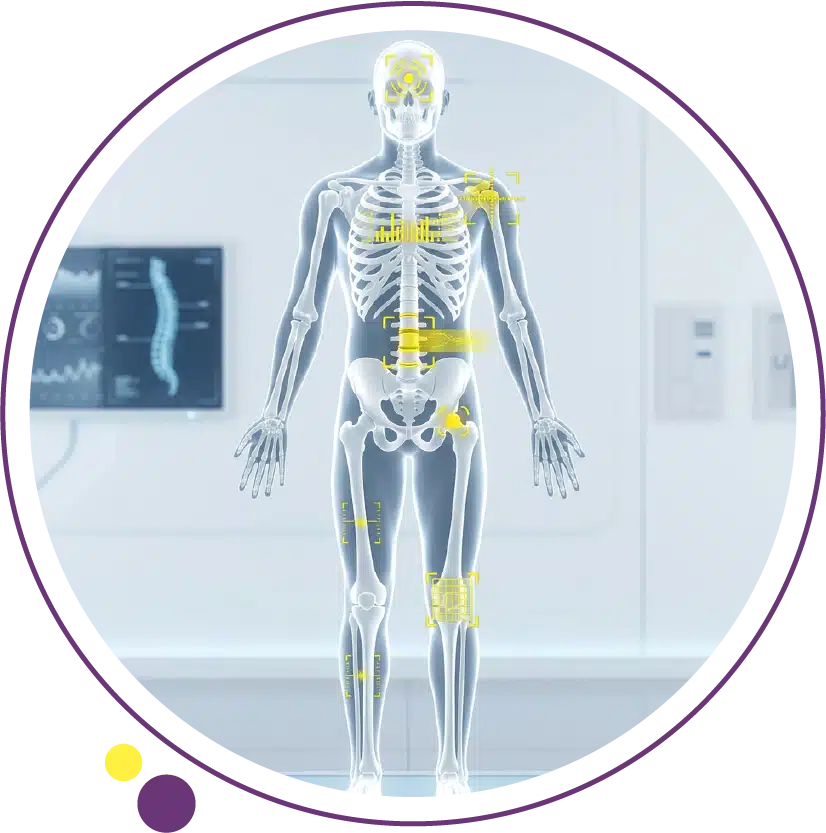
X-rays have been part of medical practice for over a century, yet they remain one of the most frequently used and clinically valuable diagnostic tools available today. Despite the rise of more advanced imaging technologies, the X-ray has not been replaced. In many clinical situations, it remains the fastest, most accessible, and most appropriate first step in the diagnostic process.
Understanding what makes X-ray imaging genuinely useful, where its strengths lie, and when it is the right choice rather than a fallback helps patients and families make better-informed decisions about their care. In this article, we will discuss the key benefits of X-ray imaging, the clinical situations where it delivers the most value, how it compares to other imaging options, who it is most suitable for, and what patients in Kuwait can expect when having a digital X-ray at an imaging center.
What Is an X-Ray and How Does It Work?
X-ray imaging works by passing a small, controlled dose of ionizing radiation through the body. Different tissues absorb the radiation at different rates: dense structures like bone absorb most of the beam and appear white on the image, while soft tissues absorb less and appear in shades of grey, and air-filled spaces such as the lungs allow most of the beam to pass through and appear dark. This contrast between tissue types is what makes X-ray images diagnostically readable.
Modern digital X-ray technology has replaced older film-based systems with digital detectors that capture images electronically. This delivers several practical advantages: images are available almost instantly, they can be enhanced and adjusted digitally to improve visibility, and they can be stored, transmitted, and reviewed remotely without physical film handling. Digital X-ray also uses lower radiation doses than traditional film systems, improving the safety profile that was already considered acceptable for most patients in most clinical situations.
The Core Benefits of X-Ray Imaging
Speed and Immediate Availability
One of the most important practical benefits of X-ray is how quickly it can be performed and interpreted. A chest X-ray or a limb X-ray takes only a few minutes from start to finish, and with digital systems, images are available for review almost immediately after acquisition. This speed matters greatly in emergency settings, where rapid diagnosis directly affects patient outcomes. A suspected fracture, pneumothorax, or swallowed foreign body can be assessed within minutes, allowing clinical decisions to proceed without delay.
For non-emergency patients, the quick turnaround means less waiting time and faster access to answers. In busy diagnostic centers and hospitals, X-ray is typically the imaging modality with the shortest appointment and reporting time from the patient’s perspective. The digital X-ray service at Images delivers this speed alongside high image quality, making it a practical first step in many diagnostic pathways across all three Kuwait branches.
Accessibility and Wide Availability
X-ray is one of the most accessible forms of medical imaging available. It does not require the same level of infrastructure, appointment lead time, or patient preparation that MRI or CT scanning typically involves. Most radiology centers, hospitals, and even some community clinics offer X-ray services, and the equipment is considerably less space-intensive and costly than advanced cross-sectional imaging technology.
For patients who need imaging quickly, who are in areas with limited access to advanced facilities, or who require imaging that can be performed with minimal preparation, X-ray is often the most practical and immediate option. At Images, digital X-ray is available across the Jabriya, Hawally, and Salmiya branches, making it accessible to patients across different parts of Kuwait without the need to travel far for straightforward diagnostic imaging.
Excellent for Bone and Joint Assessment
X-ray is the first-line imaging tool for evaluating bones and joints, and it remains highly effective for this purpose despite the availability of MRI and CT. It clearly shows fractures, joint space narrowing, bone density changes, arthritic changes, dislocations, bone deformities, and the alignment of bones after injury or surgery. For most musculoskeletal presentations, an X-ray provides the key information a doctor needs to make an immediate clinical decision.
Plain radiography for fracture detection remains the standard initial approach in emergency medicine worldwide because it is accurate, fast, and cost-effective for the majority of injury presentations. When a fracture is complex, involves the spine, or when soft tissue injury is also suspected, follow-up with CT scan or MRI may be requested. But in most cases, the X-ray is both the starting point and the sufficient answer.
Chest Imaging and Lung Assessment
The chest X-ray is one of the most performed radiological studies in medicine globally. It provides an immediate overview of the lungs, heart, mediastinum, ribs, and diaphragm in a single image. Conditions such as pneumonia, pleural effusion, pneumothorax, cardiomegaly, rib fractures, and certain lung masses can all be assessed on a chest X-ray with good diagnostic accuracy in the right clinical context.
Chest X-ray is routinely used as part of preoperative assessment, health screening programs, and initial investigation of respiratory symptoms including persistent cough, shortness of breath, chest pain, and fever. For more detailed lung evaluation, particularly when lung cancer or pulmonary embolism is being investigated, a CT scan of the chest is required. But the chest X-ray remains the practical first step in the majority of respiratory presentations, and its ability to quickly identify or exclude significant pathology makes it highly valuable in both primary care and emergency settings. Our article on diagnostic X-ray covers the full range of clinical applications in further detail.
Low Radiation Dose with Modern Digital Equipment
A common concern patients raise about X-ray is radiation exposure. While X-rays do use ionizing radiation, the doses involved in standard diagnostic X-rays are very low, and modern digital systems use even less radiation than the film-based systems that preceded them. A standard chest X-ray delivers approximately 0.1 millisieverts of radiation, which is roughly equivalent to the background radiation a person naturally receives over ten days of normal daily life.
The radiation risk from a single diagnostic X-ray is considered negligible for most adults in most clinical situations. The decision to perform an X-ray is always made by weighing the clinical benefit against any theoretical risk, and in most diagnostic scenarios the benefit significantly outweighs the small and well-characterized radiation dose involved. For patients who are pregnant, the approach is more cautious, and alternative imaging or specific shielding measures are used where appropriate. In those cases, ultrasound is typically the preferred imaging option because it involves no radiation at all.
Cost-Effectiveness Compared to Advanced Imaging
X-ray is significantly more affordable than MRI or CT scanning, which makes it an important tool in healthcare systems managing resources carefully and for patients bearing some or all of their imaging costs directly. In many clinical situations, an X-ray is all that is needed to answer the diagnostic question at hand, and ordering a more expensive and time-intensive imaging study when an X-ray would suffice is neither clinically justified nor practically helpful for the patient.
The cost-effectiveness of X-ray also supports its use as a follow-up tool. After a fracture is treated, serial X-rays are used to monitor healing progress over time. After surgery or a joint replacement, X-rays track alignment and implant positioning. This ability to perform multiple sequential studies affordably over a treatment course is one of the practical reasons X-ray remains a cornerstone of musculoskeletal care. Patients across Kuwait can access digital X-ray at Images Diagnostic Center at a cost that reflects its role as a frontline and accessible diagnostic service.
No Special Preparation or Contraindications for Most Patients
Unlike MRI, which requires screening for metal implants, pacemakers, and other contraindications, and unlike CT, which may involve contrast agents and kidney function checks, a standard X-ray requires virtually no preparation for most patients. You do not need to fast, remove implants, or complete lengthy safety questionnaires before a routine limb or chest X-ray. This simplicity makes it an immediately accessible option for a wide patient population, including elderly patients, children, and those with multiple medical conditions that might complicate other imaging modalities.
For patients who require imaging but cannot undergo MRI due to implanted devices or claustrophobia, and where CT is not indicated, X-ray often provides a practical and sufficient alternative for many clinical questions. Understanding when X-ray is the right choice and when a more advanced study is warranted is part of what a good radiological referral pathway involves, and the team at Images can help guide patients and referring clinicians toward the most appropriate imaging option for each situation.
Supports Dental, ENT, and Specialty Clinical Assessment
Beyond the chest and musculoskeletal system, X-ray plays a useful role in several specialty areas including dentistry, ENT, and abdominal assessment. Dental X-rays assess tooth structure, root health, bone loss, and the position of unerupted teeth. Sinus X-rays can help identify sinusitis or fluid levels in certain presentations. Abdominal X-rays are used to assess bowel gas patterns, identify obstruction, locate foreign bodies, and check for free air following certain abdominal emergencies.
While these specialty applications have in many cases been supplemented by more targeted imaging options such as CT or ultrasound, X-ray retains clinical utility in specific scenarios where its speed and simplicity offer advantages. For patients exploring the full range of diagnostic imaging options available in Kuwait, the services page at Images provides a comprehensive overview of all available modalities and the clinical situations each is most suited to address.
When X-Ray Is the Right First Choice
X-ray is most appropriate as a first-line investigation in a defined set of clinical presentations. These include suspected fractures or dislocations following trauma, joint pain with suspected arthritic or structural changes, chest symptoms including cough, breathlessness, or chest pain being investigated for the first time, suspected foreign body ingestion or inhalation, scoliosis screening and follow-up, and post-surgical monitoring of bone alignment or implant positioning.
In these situations, X-ray provides fast, accurate, clinically relevant information that directly guides the next step in management. Ordering a CT or MRI as the first imaging study in presentations where X-ray would answer the question is a less efficient approach that delays results and uses resources unnecessarily. The clinical logic of starting with X-ray, then escalating to CT or MRI only when additional detail is needed, is well established in evidence-based practice. For example, after an initial fracture is confirmed on X-ray, a CT scan might be ordered to assess fracture complexity before a surgical decision is made, adding targeted detail to the picture the X-ray has already established.
When X-Ray Is Not Enough
X-ray has genuine limitations that are important to understand alongside its benefits. It provides a two-dimensional projection image of a three-dimensional structure, which means that subtle fractures, complex joint pathology, and soft tissue injuries may not be visible or may be incompletely characterized. It cannot assess soft tissues such as ligaments, tendons, cartilage, or muscle with the detail that MRI provides. It cannot differentiate between tissue types that have similar densities without the benefit of contrast, and it cannot provide the cross-sectional detail of CT for complex anatomical structures.
For injuries that involve suspected ligament or tendon damage alongside bone injury, MRI is the appropriate next step because it provides detailed soft tissue visualization that X-ray simply cannot offer. For complex spinal pathology, suspected disc herniation, nerve root compression, or joint cartilage assessment, MRI is more diagnostically informative. For abdominal masses, vascular assessment, or detailed evaluation of internal organ pathology, CT scan or ultrasound will often be required. Understanding this hierarchy of imaging tools helps patients engage more confidently in conversations with their doctors about why a particular scan is being recommended and what it is expected to contribute. Our previously published article on CT scan uses provides a useful comparison of what CT adds beyond what X-ray can show in specific clinical contexts.
Home X-Ray Services in Kuwait
For patients who are unable to travel to a radiology center due to mobility limitations, post-surgical recovery, or other health conditions, the option of home-based X-ray imaging is available through Images GO, the home radiology service offered by Images Diagnostic Center. This service brings diagnostic imaging directly to the patient’s location across Kuwait, enabling X-rays to be performed at home without the practical challenges of attending a branch in person.
Home radiology is particularly valuable for elderly patients, patients in post-operative recovery, those with significant mobility impairments, and anyone whose medical condition makes travel to a clinic difficult or uncomfortable. The same digital imaging quality available in the branch setting is maintained during home visits, ensuring that the images produced are diagnostically appropriate and suitable for specialist review. If you or a family member could benefit from home imaging, you can find full details about this service and how to arrange it through the Images GO page.
Frequently Asked Questions
Is an X-ray safe to have more than once?
Yes, for most adults, having multiple X-rays over time is considered safe given the very low radiation dose involved in each individual study. Modern digital X-ray systems use lower doses than older film-based equipment, and the cumulative dose from routine diagnostic X-rays remains well below levels associated with any meaningful health risk. The decision to perform an X-ray is always based on clinical need, and the benefit in the context of diagnosis or treatment monitoring consistently outweighs the minimal radiation exposure involved.
Do I need a doctor’s referral to have an X-ray at Images?
In most cases, a referral from a doctor or specialist is required for diagnostic imaging to ensure the right type of scan is ordered for the right clinical reason. If you have been referred for an X-ray, you can bring your referral to any of the Images branches to arrange your scan. If you are unsure whether you need an X-ray or a different type of imaging, the Images team can help clarify what is most appropriate based on your situation.
How is digital X-ray different from traditional film X-ray?
Digital X-ray captures images electronically rather than on photographic film, which allows images to be reviewed immediately, adjusted digitally for optimal visualization, stored electronically, and transmitted to specialists or referring doctors without the need for physical films. Digital systems also use lower radiation doses than traditional film-based X-ray, and the image quality is generally superior, with greater dynamic range and the ability to magnify or enhance specific areas of interest during reporting.
Can an X-ray detect cancer?
X-ray can detect some cancers, particularly those that affect bone or produce visible masses in the chest, but it is not a comprehensive cancer screening tool. Chest X-ray may reveal a lung mass or lymph node enlargement, and bone X-ray can show bone lesions or destructive changes consistent with metastatic disease. However, for detailed cancer evaluation, CT scanning, MRI, or targeted specialist imaging such as mammography for breast cancer is required. If cancer is suspected, your doctor will direct you to the appropriate imaging pathway based on the specific clinical concern.
Is X-ray safe during pregnancy?
X-ray in pregnancy is approached with caution, particularly for studies that involve the abdomen or pelvis where radiation exposure to the fetus is a concern. When imaging of the chest, limbs, or skull is needed in a pregnant patient and the clinical situation is urgent, it can often be performed with appropriate shielding, as the radiation reaching the uterus from a chest or limb X-ray is extremely small. For abdominal or pelvic imaging during pregnancy, ultrasound is the preferred option as it involves no radiation. Your doctor and the radiology team will always assess the safest and most appropriate approach for each individual case.
How long does a digital X-ray take at Images?
A routine digital X-ray at Images typically takes between five and fifteen minutes from arrival to completion of the scan, depending on the body area being imaged and whether multiple views are required. The scan itself lasts only a few seconds per image. Digital images are available immediately after acquisition, and reports are prepared by a radiologist and communicated to the referring doctor according to the standard reporting workflow.
Choosing the Right Imaging for Your Needs
X-ray remains a genuinely valuable diagnostic tool not because more advanced options do not exist, but because it delivers real clinical answers quickly, safely, and accessibly for a defined and important range of medical situations. Knowing when an X-ray is the right choice and understanding what it can and cannot show helps patients engage more confidently in the imaging pathway their doctor recommends.
For situations where X-ray is the appropriate first step, and for cases where follow-up imaging with CT, MRI, or ultrasound is subsequently needed, Images Diagnostic Center offers the full range of diagnostic imaging services under one accessible provider across Kuwait. You can review all available scan types on the services page or speak directly with the team about what is best suited to your clinical needs.
Digital X-ray and the full range of imaging services are available at the following Images branches:
To book your X-ray or ask about the most appropriate scan for your situation, contact Images at any time.