
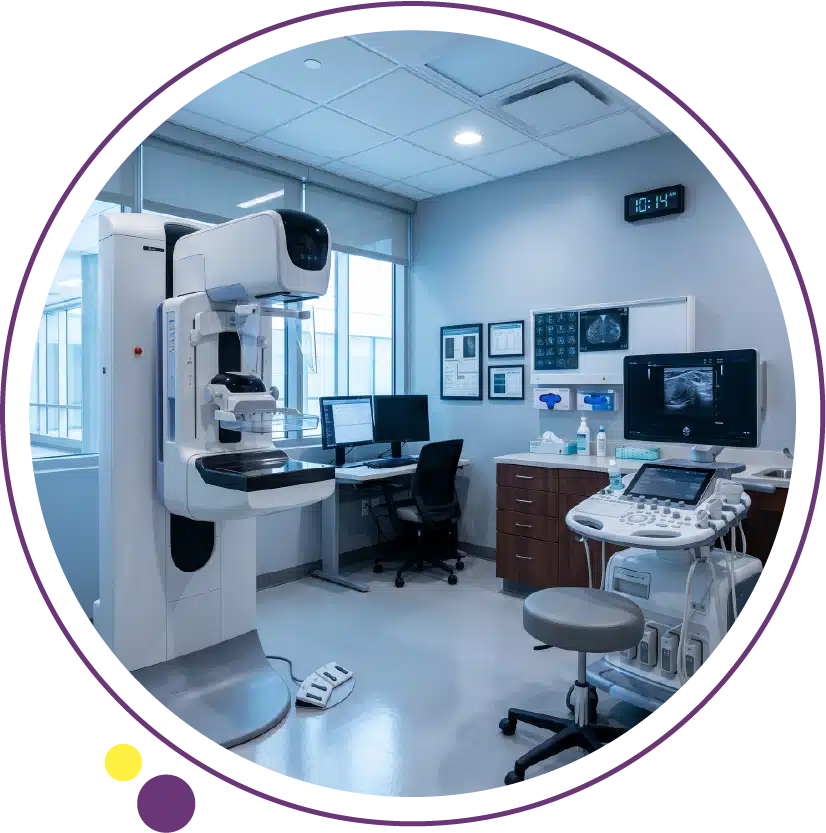
Signs of breast cancer are not limited to a single lump. Changes in skin, nipple shape, breast size, or the underarm can also matter, and some symptoms need prompt assessment even when they seem mild at first. If a breast change is new, persistent, or clearly different from your normal pattern, it is reasonable to arrange evaluation with Images Diagnostic Center, especially when a Mammogram and Ultrasound & Doppler may help clarify what is going on.
Why paying attention early matters
Many breast changes turn out to be non-cancerous, but experts consistently advise getting unusual symptoms checked rather than assuming they are harmless. That matters because early breast cancer may cause no symptoms at all, and when symptoms do appear, they can overlap with benign problems such as cysts, duct changes, or skin irritation. A patient who understands what is normal for her own body is in a better position to notice a change and discuss the right next step through Services or the Contact page.
7 warning signs that deserve medical attention
1) A new lump or a firm thickened area
A new lump in the breast or underarm is still one of the most important signs of breast cancer to take seriously. The concern is not only about size. A small lump, a firm patch, or a localized thickened area that feels different from the surrounding tissue can all deserve imaging, especially if the change persists. At Images Diagnostic Center, this kind of symptom may lead to targeted breast imaging with Mammogram and Ultrasound & Doppler depending on age, symptoms, and referral context.
2) Swelling or a change in breast size or shape
Not every concerning sign is a lump you can clearly feel. Swelling of part of the breast, fullness, new asymmetry, or a visible change in shape may also need assessment, especially when one breast starts looking noticeably different from the other in a new way. If the question is whether you need breast imaging or a symptom-based evaluation, it can help to review the Mammogram page and the broader Services page before booking.
3) Skin dimpling, thickening, or an orange-peel look
Skin changes deserve more attention than many people realize. Dimpling, puckering, thickening, or a texture that looks like orange peel can happen when breast tissue is being pulled inward or when fluid affects the skin. These changes do not automatically mean cancer, but they are not something to ignore, and they are part of the reason some patients need both Mammogram and Ultrasound & Doppler rather than waiting to “see what happens.”
4) A nipple that turns inward or changes in shape
Some people naturally have flat or inverted nipples, so the key concern is a change that is new for you. A nipple that has recently pulled inward, shifted in direction, or started looking different from its usual appearance should be checked, especially if that change happens on one side only. In practice, this kind of symptom may lead to breast imaging through Mammogram and, when needed, complementary Ultrasound & Doppler.
5) Nipple discharge that is new, bloody, or not related to breastfeeding
Nipple discharge can happen for non-cancerous reasons, but discharge that is spontaneous, persistent, clear, or bloody deserves prompt medical review. This is especially important when it comes from one breast or one duct and is not connected to pregnancy or breastfeeding. If this symptom appears, the most useful next step is usually not guessing, but arranging a symptom-led assessment through Contact and reviewing the breast imaging options under Services.
6) A rash, flaking, crusting, or irritation around the nipple
A nipple rash is easy to dismiss as dry skin or eczema, but a rash that persists, recurs, or clearly involves the nipple itself should not be ignored. Some breast cancers can present with scaly, crusted, red, or irritated nipple skin, and this is one reason breast symptoms should be assessed in context rather than treated only as a skin issue. If you are unsure what type of breast exam is usually paired with these symptoms, the Mammogram page and Blog can help you understand the usual workup.
7) A lump or swelling in the armpit
An underarm lump is sometimes the first thing a patient notices. Swollen lymph nodes under the arm or near the collarbone can happen with infection and other conditions, but they are also recognized warning signs that need assessment in the right setting. This is one reason symptom evaluation may extend beyond the breast itself, and why a patient may be referred for Ultrasound & Doppler, Mammogram, or additional breast imaging depending on the clinical picture.
Signs that are sometimes misunderstood
Breast pain creates a lot of anxiety, but pain alone is usually less specific than people think. According to breast pain, pain that comes and goes, affects both breasts, or follows a hormonal pattern is commonly not a sign of cancer by itself. The concern rises more when pain is focal, persistent, or appears alongside a lump, discharge, or skin change, which is why symptom patterns matter more than one isolated detail. If pain is part of a broader symptom picture, Ultrasound & Doppler and Mammogram may both become relevant.
It is also important to remember that not every breast change points to cancer. Benign conditions such as cysts or duct ectasia can cause discharge, tenderness, or a lump, and many breast lumps are non-cancerous. The goal of imaging is not to create panic, but to sort out what needs follow-up and what does not. That is why a symptom-led visit to Images Diagnostic Center is about clarity, not assumptions.
What imaging is usually used after symptoms appear
When a patient notices signs of breast cancer, imaging is chosen based on age, symptoms, breast density, and the clinician’s concern. A Mammogram can be used both for screening and for evaluating symptoms, while a breast ultrasound is often used to investigate a lump or another abnormality found on exam or mammography. This is also why it helps patients to understand the difference between screening and diagnostic imaging rather than thinking of breast imaging as one single test.
Dense breast tissue can make mammograms harder to interpret because both dense tissue and some abnormalities appear white on the image. That does not mean mammograms are not useful. It means some patients may need more individualized decisions, and in selected situations additional imaging may be discussed. If this comparison is relevant to your symptoms, the previously published Images article on mammogram vs ultrasound is a useful next read, alongside the Mammogram and Ultrasound & Doppler service pages. You can also read more about dense breasts.
MRI may enter the discussion in more selected cases, especially for patients at higher risk or when other imaging does not answer the question clearly. A breast MRI is not a replacement for mammography in routine screening, but it can be a useful additional tool in the right scenario. For patients who need broader imaging support, MRI and Open MRI pages can help explain what that part of the service looks like.
When to seek evaluation instead of waiting
A new lump, bloody discharge, nipple inversion, underarm swelling, or obvious skin changes should not be watched for weeks without medical advice. Rapid redness, warmth, swelling, or a breast that quickly becomes heavier or larger can also matter because some aggressive forms of breast cancer may present with inflammation rather than a classic lump. If you are in Kuwait and the change is new or clearly abnormal for you, it is reasonable to arrange assessment through Contact or review the nearest branch before choosing the most convenient visit.
Screening is still important even when no symptoms are present, because some early cancers are found only on imaging. Current screening guidance from the U.S. Preventive Services Task Force recommends screening mammography every other year from age 40 to 74, while the American Cancer Society says women 40 to 44 have the option to start annual mammograms and women 45 to 54 should get them yearly. That does not replace individual advice, but it shows why routine Mammogram discussions matter even before symptoms appear.
Choosing the right next step in Kuwait
The most practical way to think about signs of breast cancer is not to diagnose yourself from one symptom alone, but to notice what is new, what is persistent, and what is clearly different from your usual pattern. A lump is important, but so are nipple changes, skin dimpling, discharge, rapid swelling, and underarm lumps. When the symptom is real and ongoing, the goal is timely evaluation with the right imaging pathway, not reassurance based on guesswork. Reviewing Services, the Mammogram page, or the Ultrasound & Doppler page can help you understand where that process usually starts.
If the change is new and you want a clearer next step, start with the nearest branch or use the Contact page to ask which breast imaging route is most appropriate for your situation.
FAQ
- Can breast cancer happen without a lump?
Yes. Some breast cancers are first noticed because of skin changes, nipple discharge, swelling, or an abnormality seen on imaging rather than a distinct lump. That is one reason symptom-based assessment and regular Mammogram planning both matter.
- Is breast pain usually a sign of breast cancer?
Usually not when it appears alone, especially if it is in both breasts or follows a cyclical pattern. Pain becomes more important when it is focal, persistent, or appears with other symptoms, which is when Ultrasound & Doppler or Mammogram may be considered.
- If I have a suspicious symptom, do I need a mammogram or an ultrasound?
That depends on your age, the exact symptom, and the referring clinician’s question. In many real cases, Mammogram and Ultrasound & Doppler are complementary rather than interchangeable, which is why targeted breast imaging is often tailored rather than one-size-fits-all.
- Does a nipple rash always mean cancer?
No. Skin irritation and eczema can affect the nipple area, and many breast symptoms turn out to be benign. A rash that persists, recurs, or clearly involves the nipple itself still deserves medical review, and the next step may involve breast imaging through Services or a visit arranged through Contact.
- Do dense breasts change how symptoms are assessed?
They can affect how easily mammograms are interpreted, which is why the imaging plan may need to be more individualized. Patients with dense tissue may sometimes need additional discussion around Mammogram, Ultrasound & Doppler, and in selected situations MRI.