
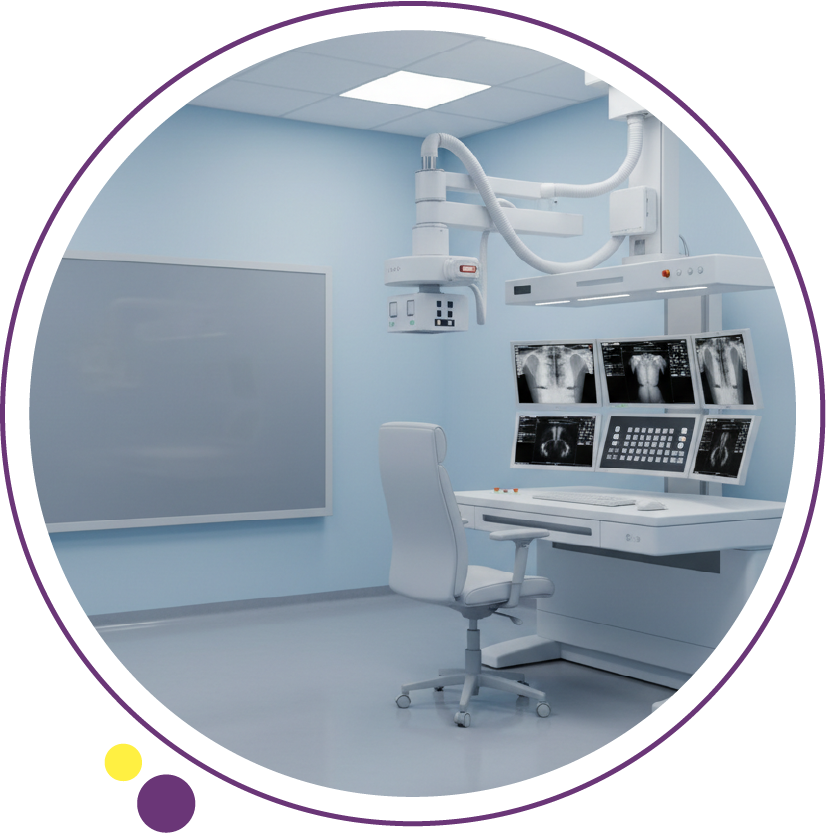
A diagnostic x-ray remains one of the most frequently requested imaging tests in modern medicine. At Images Diagnostic Center in Kuwait, X-ray examinations form the foundation of rapid clinical decision-making in emergency care, outpatient evaluation, orthopedic assessment, and routine screening. Although technologies such as MRI scan, CT scan, and ultrasound provide advanced cross-sectional detail, conventional radiography continues to play a central role because it is fast, accessible, and clinically efficient for specific indications.
This article explains when a diagnostic X-ray is medically indicated, how the exam works, how it differs from other imaging modalities, and what patients in Kuwait can expect before and after the study.
What is a diagnostic x-ray and how does it work?
A diagnostic x-ray is a medical imaging test that uses controlled doses of ionizing radiation to create images of internal body structures. X-rays pass through the body and are absorbed differently by various tissues:
- Bone absorbs more radiation and appears white.
- Soft tissues absorb less and appear in shades of gray.
- Air appears black.
Digital detectors capture these differences and convert them into high-resolution images that radiologists interpret. Modern radiology centers use digital X-ray systems that allow lower radiation doses compared to older film systems, immediate image preview, enhanced post-processing for better diagnostic clarity, and electronic archiving and structured reporting. Dose optimization follows internationally recognized principles such as ALARA, meaning radiation exposure is kept as low as reasonably achievable while maintaining diagnostic quality.
When do doctors order a diagnostic x-ray?
A diagnostic X-ray is typically the first-line imaging test when structural abnormalities involving bone, chest organs, or certain abdominal conditions are suspected.
Common clinical indications
Musculoskeletal conditions
- Suspected fractures or dislocations
- Persistent joint pain
- Arthritis evaluation
- Post-trauma assessment
- Alignment checks after orthopedic surgery
Chest symptoms
- Persistent cough
- Shortness of breath
- Suspected pneumonia
- Tuberculosis screening
- Rib injuries
- Evaluation of heart size
Abdominal concerns
- Suspected bowel obstruction
- Ingestion of foreign objects
- Severe abdominal pain in selected cases
Dental and maxillofacial indications
- Jaw trauma
- Sinus disease
- Dental root assessment
In many cases, a diagnostic x-ray in Kuwait is performed before escalating to CT scan or magnetic resonance imaging, depending on clinical findings.
Diagnostic x-ray vs CT scan vs MRI: how do doctors choose?
Imaging selection depends on the suspected pathology and the anatomical detail required.
X-ray vs CT scan in Kuwait
A CT scan in Kuwait, also known as computed tomography, produces cross-sectional images with higher anatomical detail than standard radiography. CT is preferred when complex fractures are suspected, internal bleeding must be ruled out, detailed evaluation of lungs is required, or trauma assessment involves multiple body regions. However, CT involves higher radiation exposure compared to X-ray.
X-ray vs MRI scan in Kuwait
An MRI scan in Kuwait uses magnetic fields instead of radiation and provides superior soft tissue contrast. MRI is preferred for ligament and tendon injuries, spinal disc disease, brain pathology, and soft tissue tumors. For simple fractures or initial chest evaluation, a diagnostic X-ray remains the appropriate first step.
X-ray vs ultrasound in Kuwait
Ultrasound in Kuwait, including Doppler ultrasound, uses sound waves instead of radiation. It is ideal for Pregnancy imaging, abdominal organ evaluation, vascular flow studies, and pediatric imaging. X-ray is more appropriate for bone and chest evaluation. Correct modality selection ensures accurate diagnosis imaging center Kuwait standards are maintained while minimizing unnecessary radiation.
What happens during a diagnostic x-ray appointment?
Understanding the clinical workflow helps patients feel prepared and confident.
Step 1: Registration and screening
Upon arrival, identity verification is completed, clinical indication is confirmed, pregnancy status is assessed for women of reproductive age, and prior imaging may be reviewed.
Step 2: Positioning
The radiographer positions the patient according to the required projection: standing for chest X-ray, lying down for spine imaging, or seated or angled positions for joint studies. Proper positioning directly impacts diagnostic accuracy.
Step 3: Image acquisition
The patient remains still, breath-holding may be required for chest images, exposure takes less than a second, and multiple views may be required.
Step 4: Image review and reporting
Images are reviewed for technical adequacy before the patient leaves. A radiologist interprets the images and issues a structured report. Radiology report turnaround time varies based on urgency, but urgent studies are prioritized in clinical workflows.
How should patients prepare for a diagnostic x-ray?
Most X-ray exams require minimal preparation and follow standard protocols.
General preparation checklist
Wear comfortable clothing without metal, remove jewelry, belts, and metallic accessories, inform staff if pregnant or possibly pregnant, and bring prior imaging reports if available.
Special preparation
For abdominal X-ray, fasting may be requested in certain cases, or laxatives may occasionally be recommended depending on the indication. For contrast-based X-ray studies such as fluoroscopic exams, kidney function may be assessed, and allergy history is reviewed. Preparation protocols improve image clarity and diagnostic confidence.
Is diagnostic x-ray safe?
Radiation exposure from a standard diagnostic X-ray is low. For example, chest X-ray radiation is roughly equivalent to a few days of natural background radiation, and extremity X-rays involve minimal exposure. Radiology centers follow dose monitoring protocols, equipment calibration standards, and shielding when appropriate. Pregnancy precautions are always taken. Alternative imaging such as ultrasound may be recommended when clinically appropriate.
What makes image quality reliable for diagnosis?
Accurate interpretation depends on several technical and clinical factors:
Technical quality
Correct positioning, adequate exposure settings, absence of patient motion, and proper collimation.
Clinical context
Clear referral question, relevant patient history, and comparison with prior studies.
Radiologist expertise
Structured reporting, recognition of subtle findings, and correlation with clinical data. An accurate diagnosis imaging center Kuwait standard depends on the integration of these elements rather than the image alone.
How fast can a diagnostic x-ray report be ready?
Radiology report turnaround time depends on urgency and clinical complexity. In general, emergency X-rays are interpreted promptly, routine outpatient exams are reported within standard reporting workflows, and complex cases may require additional correlation. Efficient workflow systems allow digital image transfer to referring physicians and integration with hospital information systems.
Are contrast agents used in diagnostic x-ray?
Most plain X-rays do not require contrast. However, specialized X-ray procedures such as gastrointestinal contrast studies, fluoroscopic swallowing exams, or arthrography may use contrast media. Before contrast use, kidney function is evaluated if iodinated contrast is used, allergy history is reviewed, and hydration guidance may be provided. Post-contrast care may include increased fluid intake and monitoring for allergic symptoms.
What should patients watch for after the exam?
After a plain diagnostic X-ray, no special restrictions are required and normal activity can be resumed. After contrast-based imaging, mild nausea may occur, allergic reactions are rare but should be reported immediately, and you should follow physician guidance for hydration. Persistent pain or worsening symptoms after trauma should prompt medical reassessment regardless of imaging results.
How does diagnostic x-ray support other imaging services?
At a comprehensive imaging center, radiography integrates with advanced modalities:
- Abnormal findings on X-ray may lead to 3 Tesla MRI Kuwait evaluation for soft tissue characterization.
- Suspicious lung findings may require CT scan in Kuwait.
- Bone density concerns may lead to bone density test DEXA Kuwait.
- Breast abnormalities may require mammogram Kuwait and dedicated breast imaging protocols.
Structured imaging pathways improve diagnostic efficiency and patient safety.
FAQs
- Does a diagnostic x-ray hurt?
No. The procedure is painless. Some discomfort may occur from positioning if an injury is present.
- How long does the exam take?
Most studies are completed within 10 to 20 minutes including positioning and image review.
- Can children have X-rays safely?
Yes. Pediatric protocols use the lowest effective radiation dose and shielding when appropriate.
- Should I avoid X-rays if I had many before?
Doctors evaluate cumulative exposure when necessary. Imaging is only ordered when the expected diagnostic benefit outweighs potential risk.
- What if the X-ray result is normal but symptoms persist?
Further evaluation with CT, MRI scan in Kuwait, or ultrasound in Kuwait may be recommended based on clinical judgment.
Making the right imaging decision
Selecting the correct imaging exam depends on the clinical indication, symptom duration, and suspected pathology. A diagnostic x-ray is often the first and most appropriate step for evaluating fractures, chest infections, and structural abnormalities. Accurate preparation, standardized positioning protocols, and structured reporting contribute significantly to diagnostic confidence. Safety screening, especially regarding pregnancy and prior imaging, remains essential in ensuring responsible radiologic practice.
Images Diagnostic Center branches in Kuwait:
Patients seeking further clarification about a recommended X-ray examination or those wishing to schedule an appointment may contact the center directly. Images Diagnostic Center maintains consistent clinical standards in diagnostic imaging across Kuwait, with emphasis on safety protocols, accurate reporting, and patient-centered care in everyday radiology practice.