
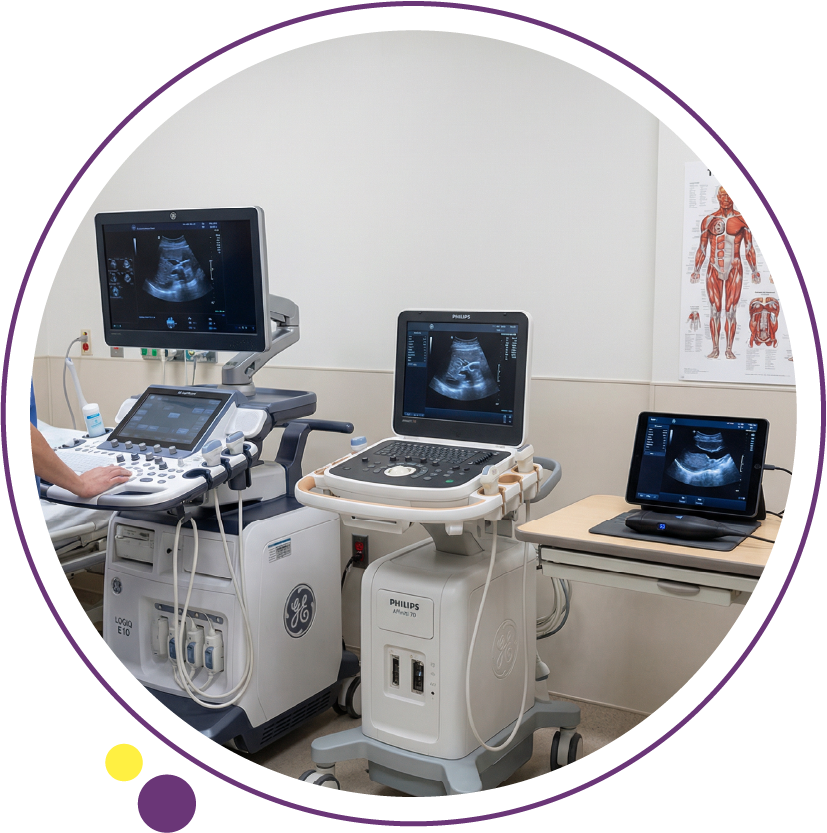
Ultrasound is one of the most versatile imaging tools in modern radiology. Understanding the types of ultrasound helps patients and clinicians select the right exam, prepare correctly, and interpret results in clinical context. AtImages Diagnostic Center in Kuwait, ultrasound examinations are performed within standardized protocols that prioritize diagnostic clarity, patient safety, and appropriate clinical indication.
This guide provides a detailed comparison of ultrasound modalities, explains when each type is ordered, and outlines practical preparation steps that directly affect image quality and diagnostic confidence.
What is ultrasound and how does it work?
Ultrasound imaging uses high frequency sound waves transmitted from a handheld probe called a transducer. These sound waves reflect off internal tissues and return as echoes, which are converted into real time images.
Unlike Digital X-ray in Kuwait or CT-Scan in Kuwait, ultrasound does not use ionizing radiation. It is particularly effective for:
- Soft tissues
- Fluid-filled structures
- Blood flow evaluation
- Pregnancy monitoring
- Musculoskeletal assessment
Its diagnostic strength lies in real-time visualization. Motion such as fetal heartbeat, vascular flow, tendon movement, and organ mobility can be assessed dynamically.
Why are there different types of ultrasound?
Each ultrasound modality is designed to answer a specific clinical question. A pelvic ultrasound evaluates organs differently than a vascular Doppler study. The physics remain the same, but probe frequency, imaging technique, and software processing vary.
Choosing the correct ultrasound type improves:
- Diagnostic accuracy
- Examination efficiency
- Clinical decision making
- Follow-up planning
Radiology best practices, aligned with ACR guidance, emphasize matching the imaging modality to the suspected pathology rather than using a one-size-fits-all approach.
Main types of ultrasound and how they differ
Below is a clinically structured comparison of the major ultrasound categories used in Images Diagnostic Center in Kuwait.
1. Abdominal ultrasound
Clinical indications
- Right upper quadrant pain
- Gallstones and biliary disease
- Fatty liver or liver lesions
- Pancreatic inflammation
- Kidney stones or hydronephrosis
- Abdominal masses
How it works
A lower-frequency probe penetrates deeper into the abdomen, allowing visualization of liver, gallbladder, spleen, pancreas, kidneys, and major vessels.
Preparation
- Fasting 6 to 8 hours
- Avoid heavy meals before exam
- Continue medications unless instructed otherwise
Fasting reduces bowel gas and ensures the gallbladder is distended for clearer imaging.
2. Pelvic ultrasound
Pelvic ultrasound may be performed transabdominally or transvaginally depending on the indication.
Clinical indications
- Irregular menstrual cycles
- Ovarian cyst evaluation
- Uterine fibroids
- Early pregnancy assessment
- Pelvic pain
Preparation
- Transabdominal: Full bladder required; Drink 3 to 4 glasses of water one hour before.
- Transvaginal: Empty bladder; No fasting needed.
A full bladder acts as an acoustic window, improving visualization of pelvic structures.
3. Obstetric ultrasound
A specialized form of pelvic ultrasound used during pregnancy.
Indications
- Confirm intrauterine pregnancy
- Assess fetal growth
- Monitor amniotic fluid
- Detect structural abnormalities
- Placental localization
Ultrasound remains the primary imaging modality in pregnancy due to absence of radiation exposure.
4. Doppler ultrasound and vascular ultrasound
When is Doppler ultrasound medically necessary?
Ultrasound & Doppler is indicated when blood flow needs evaluation. It becomes medically necessary in cases such as:
- Suspected deep vein thrombosis
- Carotid artery stenosis
- Peripheral arterial disease
- Varicose vein mapping
- Testicular torsion
- Renal artery stenosis
Doppler ultrasound measures frequency shifts in sound waves to assess direction and velocity of blood flow.
Types of Doppler
- Color Doppler
- Power Doppler
- Spectral Doppler
Each provides different hemodynamic information that supports vascular diagnosis.
5. Breast ultrasound
Often used alongside Mammogram screening.
Indications
- Palpable breast lump
- Dense breast tissue
- Follow-up of mammographic findings
- Guidance for biopsy
Ultrasound distinguishes between cystic and solid lesions. In breast imaging, findings are reported within structured frameworks such as BI-RADS for consistency and clarity.
6. Musculoskeletal ultrasound
Clinical uses
- Tendon tears
- Rotator cuff evaluation
- Ligament injuries
- Joint effusions
- Soft tissue masses
Dynamic assessment during movement is a key advantage over static imaging methods.
7. Thyroid ultrasound
Indications
- Thyroid nodules
- Goiter evaluation
- Lymph node mapping
- Biopsy guidance
Ultrasound characteristics such as echogenicity, margins, and calcifications influence risk stratification.
8. Pediatric ultrasound
Used for:
- Infant hip screening
- Neonatal brain imaging
- Pyloric stenosis
- Abdominal masses
Children benefit from ultrasound because it avoids radiation exposure compared to CT-Scan imaging.
How does ultrasound compare to other imaging modalities in Kuwait?
Ultrasound vs MRI scan in Kuwait
Ultrasound:
- Real-time
- Cost-effective
- Ideal for superficial structures
MRI scan in Kuwait:
- Superior soft tissue contrast
- No radiation
- Better for deep pelvic, neurological, and complex musculoskeletal pathology
For example, a rotator cuff tear may be initially evaluated with ultrasound, but MRI confirms full-thickness involvement.
Ultrasound vs CT scan in Kuwait
Ultrasound:
- No radiation
- Portable
- Preferred in pregnancy
CT-Scan in Kuwait:
- High resolution cross-sectional imaging
- Superior for trauma, internal bleeding, lung pathology
CT is preferred in acute abdominal emergencies when perforation or complex inflammatory processes are suspected.
Ultrasound vs X-ray in Kuwait
Digital X-ray in Kuwait:
- Best for bone fractures
- Quick and widely available
Ultrasound:
- Soft tissue and fluid assessment
- Tendons and vascular flow
Ultrasound vs bone density test (DEXA) Kuwait
Ultrasound does not measure bone mineral density. A DEXA Scan Kuwait is required for osteoporosis screening.
What makes Doppler ultrasound clinically valuable?
Ultrasound & Doppler adds a functional layer to structural imaging. It evaluates:
- Flow velocity
- Turbulence
- Vessel patency
- Arterial narrowing severity
This information is critical in stroke risk assessment and vascular disease monitoring.
How to prepare for different types of ultrasound
Preparation directly influences image clarity.
- Abdominal ultrasound: Fast 6 to 8 hours, avoid chewing gum, take water only if necessary.
- Pelvic ultrasound: Full bladder for transabdominal, empty bladder for transvaginal.
- Vascular ultrasound: Wear loose clothing, avoid compression garments.
- Thyroid or musculoskeletal ultrasound: No fasting required, wear accessible clothing.
Step-by-step patient journey at Images Diagnostic Center
- Arrival and registration
- Clinical history review
- Indication confirmation
- Positioning and scanning
- Real-time image acquisition
- Post-scan instructions
- Radiologist interpretation
Diagnostic confidence depends on:
- Correct probe selection
- Patient cooperation
- Motion control
- Clear acoustic windows
- Experienced radiologist review
Integrating ultrasound into a broader diagnostic pathway
Ultrasound often serves as the first-line imaging tool. Depending on findings, it may lead to:
- Targeted biopsy
- Cross-sectional imaging
- Follow-up monitoring
- Surgical referral
Its value lies in accessibility, speed, and ability to guide immediate clinical decisions.
Conclusion
Understanding the types of ultrasound allows patients and clinicians to approach diagnostic imaging with clarity and purpose. Each ultrasound modality addresses specific clinical questions, and preparation directly affects image quality and interpretation confidence.
At Images Diagnostic Center in Kuwait, ultrasound services are integrated within a broader diagnostic framework that includes MRI scan in Kuwait, CT-Scan in Kuwait, Mammogram Kuwait, Ultrasound & Doppler, Digital X-ray in Kuwait, and DEXA Scan Kuwait. Imaging delivers its highest value when the right modality is selected for the right indication and performed under structured clinical protocols.
Careful preparation, appropriate clinical indication, and expert interpretation together ensure that ultrasound findings contribute meaningfully to accurate diagnosis and informed medical decisions.
FAQ
- How long does an ultrasound take?
Most studies last 15 to 30 minutes. Complex vascular or obstetric studies may take longer depending on anatomy and clinical questions.
- Are there risks associated with ultrasound?
Diagnostic ultrasound is considered safe when performed according to medical guidelines. There is no ionizing radiation. Thermal and mechanical indices are monitored to maintain safe exposure levels.
- What impacts the accuracy of ultrasound findings?
Several factors influence diagnostic reliability:
- Body habitus
- Excess bowel gas
- Inadequate preparation
- Patient movement
- Operator experience
- Image interpretation quality
Standardized reporting and adherence to protocol improve consistency.
- How fast are ultrasound reports available?
Radiology report turnaround time varies based on case complexity and workflow. In most diagnostic imaging centers, ultrasound reports are typically available within a short period after radiologist review. Complex cases requiring correlation with MRI scan in Kuwait or CT-Scan in Kuwait may require extended interpretation time.
- When is ultrasound not the ideal imaging choice?
Ultrasound may be limited in:
- Deep abdominal trauma
- Air-filled structures
- Complex neurological conditions
- Detailed bone imaging
In such cases, CT-Scan in Kuwait or MRI scan in Kuwait may provide superior diagnostic information.