
Understanding the CT scan meaning is an essential step for any patient preparing for diagnostic imaging. A CT scan is often requested when physicians need fast, detailed, and reliable internal images to guide clinical decisions.
While many people associate CT scans only with emergencies, their role extends far beyond urgent care, from cancer detection and cardiac assessment to monitoring chronic conditions and guiding treatment planning.
This comprehensive article explains what a CT scan is, how it works, typical CT scan cost expectations, common medical uses, what are the types of a CT scan, and what happens during diagnosis.
The goal is to help you approach your appointment informed, confident, and aware of how modern imaging supports accurate medical care, particularly at advanced imaging centers in Kuwait such as Images Diagnostic Center.
What does a CT scan mean in medical imaging?
The CT scan meaning refers to Computed Tomography, an advanced diagnostic imaging technique that combines X-ray technology with sophisticated computer processing. Instead of producing a single flat image like conventional X-rays, CT scans generate cross-sectional images of the body, allowing doctors to examine organs, bones, blood vessels, and soft tissues in precise detail.
Each scan produces multiple “slices” that are reconstructed into highly detailed 2D and 3D images. This layered approach is what gives CT imaging for accurate diagnosis its clinical value, especially when evaluating complex anatomical areas or subtle disease processes.
CT scans are widely used because they are fast, highly informative, and effective in both emergency and non-emergency settings.
How does a CT scan work?
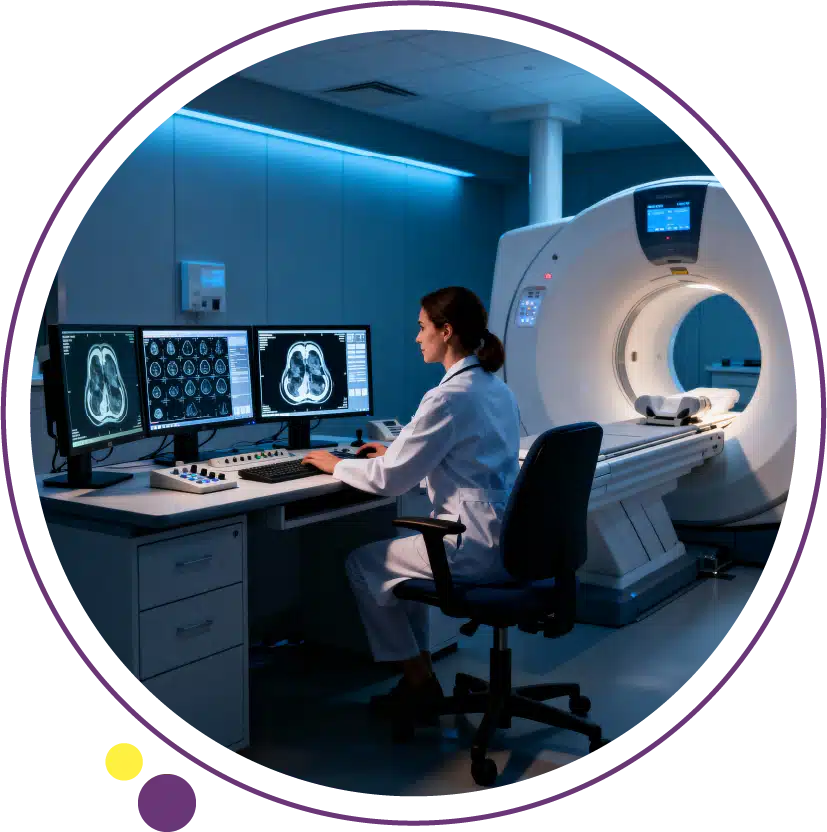
During a CT scan, the patient lies on a motorized table that moves through a circular scanner. Inside the scanner, an X-ray tube rotates around the body, capturing images from multiple angles. Advanced software processes these images into detailed cross-sections.
In many cases, a contrast agent (also called contrast dye) may be used. This substance helps highlight blood vessels, organs, or tumors, making abnormalities easier to detect. The decision to use contrast depends on the clinical question being investigated.
At Images Diagnostic Center, CT imaging protocols are designed to balance high diagnostic clarity with patient safety, using optimized radiation doses and advanced scanner technology.
Why are CT scans so important for diagnosis?
CT scans are valued for their ability to deliver rapid and accurate results. They allow physicians to detect conditions that may not be visible through physical examination or basic imaging methods.
Some of the diagnostic advantages include:
- High-resolution visualization of internal organs
- Clear differentiation between soft tissue, bone, and blood vessels
- Fast image acquisition, critical in emergency care
- Reliable guidance for treatment planning and follow-up
This makes CT scans for clinical diagnosis a cornerstone of modern radiology.
Common medical uses of CT scans
CT scans are used across multiple medical specialties. Their versatility is one of the reasons they are so frequently requested by physicians.
- Neurological diagnosis
CT scans are often the first imaging test used to evaluate head injuries, strokes, or unexplained neurological symptoms. They help detect bleeding, swelling, fractures, or masses in the brain quickly and accurately.
- Chest and lung evaluation
A CT scan of the chest provides detailed imaging of the lungs, heart, and surrounding structures. It is commonly used to assess lung infections, pulmonary embolism, tumors, and chronic lung diseases.
- Abdominal and pelvic assessment
CT imaging plays a crucial role in diagnosing abdominal pain, organ inflammation, internal bleeding, and tumors involving the liver, pancreas, kidneys, intestines, and reproductive organs.
- Cardiac and vascular imaging
Specialized cardiac CT scans evaluate coronary arteries, detect calcium buildup, and assess vascular conditions. These scans are increasingly used for early cardiac risk assessment and non-invasive diagnosis.
- Musculoskeletal imaging
CT scans provide precise visualization of bones and joints, making them valuable for complex fractures, spinal disorders, and joint evaluations.
CT scan vs MRI: what is the difference?
While both CT scans and MRI scans provide detailed images, they serve different diagnostic purposes.
CT scans are faster and particularly effective for imaging bones, lungs, and detecting acute bleeding. MRI scans, on the other hand, excel in soft tissue evaluation, such as brain tissue, spinal cord, and ligaments.
At Images Diagnostic Center, radiologists select the appropriate modality based on clinical needs, ensuring patients receive the most suitable and informative examination.
CT scan cost overview: sample prices for reference
While the exact CT scan cost depends on the body area examined, scan complexity, and whether contrast material is required, the following examples provide a general cost framework to help patients understand what to expect when scheduling a CT examination in Kuwait.
| CT examination | Approximate cost (KD) |
| CT scan of the abdomen and pelvis | 180 |
| CT scan of the abdomen with pelvis (limited protocol) | 120 |
| CT scan of chest, abdomen, and pelvis | 225 |
| Whole body CT scan | 205 |
| CT scan of the urinary tract | 120 |
| Pelvic CT scan | 120 |
| Limited follow-up CT scan | 55 |
| Contrast injection (when clinically required) | 20 |
These prices are indicative and meant to illustrate cost ranges, not replace a personalized medical quotation. Final pricing may vary depending on clinical indications, scan protocol, and whether contrast-enhanced imaging is necessary for diagnostic accuracy.
How accurate are CT scans?
CT imaging accuracy is one of the strongest advantages of this technology. When interpreted by experienced radiologists, CT scans can detect conditions at very early stages, improving treatment outcomes.
Accuracy depends on:
- Image quality
- Proper patient positioning
- Use of appropriate contrast protocols
- Expertise of the radiologist
Images Diagnostic Center emphasizes subspecialty interpretation, meaning scans are reviewed by radiologists with focused expertise in specific body systems.
What happens during a CT scan appointment?
Knowing what to expect helps reduce anxiety and ensures a smooth experience.
The process typically includes:
- Patient check-in and medical history review
- Preparation instructions, including removal of metal objects
- Possible administration of contrast material
- The scanning process, which usually lasts only a few minutes
- Post-scan observation if contrast was used
The scan itself is painless, and most patients can resume normal activities shortly afterward.
How CT scans support long-term patient care
Beyond diagnosis, CT scans play a critical role in monitoring disease progression, evaluating treatment response, and planning surgical or interventional procedures.
They provide objective, measurable data that physicians rely on for evidence-based care, making them an indispensable tool in modern healthcare systems.
FAQs
What does a CT scan show that X-rays cannot?
CT scans provide cross-sectional images that reveal soft tissues, blood vessels, and internal organs in much greater detail than standard X-rays.
Is a CT scan painful?
No, the scan itself is painless. Some patients may feel mild warmth if contrast material is used.
How long does a CT scan take?
The scanning process usually takes only a few minutes, though preparation may take longer.
Can CT scans detect cancer?
Yes, CT scans are commonly used to detect tumors, assess their size, and monitor treatment response.
Do I need to fast before a CT scan?
Fasting may be required for certain scans, especially those involving contrast material. Instructions are provided before the appointment.
How often can CT scans be repeated safely?
The frequency depends on medical necessity. Physicians balance diagnostic benefits with radiation exposure considerations.
Is CT scan radiation safe?
CT scans use ionizing radiation, but modern scanners are designed to minimize exposure while maintaining diagnostic quality. The medical benefit of accurate diagnosis generally outweighs the risks associated with radiation, especially when scans are appropriately prescribed. At Images Diagnostic Center, radiation safety protocols follow international standards, ensuring doses are kept as low as reasonably achievable without compromising image clarity.
How fast are CT scan results?
One of the key advantages of CT imaging is speed. In many cases, preliminary results can be available quickly, with finalized radiology reports delivered within hours or the same day. Fast reporting supports timely clinical decisions, particularly in urgent or time-sensitive cases.
Planning your diagnostic imaging with confidence
Accurate diagnosis begins with the right imaging study, performed using advanced technology and interpreted by experienced specialists.
Images Diagnostic Center offers comprehensive CT imaging services alongside MRI, ultrasound, mammography, bone density testing, and home radiology services, all delivered with a focus on precision, safety, and patient-centered care.
If you or your physician require CT scan imaging for accurate diagnosis, the team at Images Diagnostic Center is available to guide you through preparation, scanning, and result interpretation with clarity and professionalism.
For appointments or inquiries:
📞 (+965) 1899 888
Taking a proactive approach to diagnostic imaging ensures earlier detection, clearer answers, and more confident healthcare decisions.